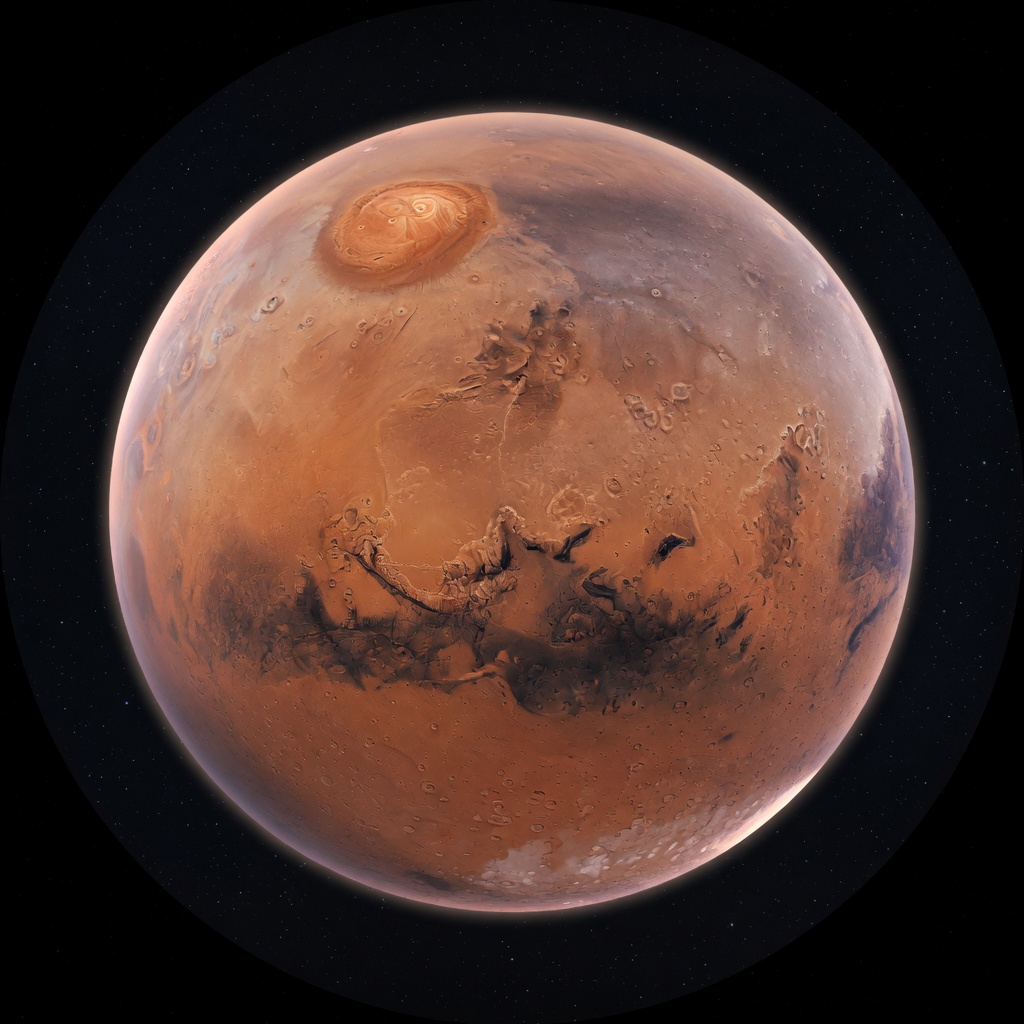
Five old ways of talking about the red light. Babylon wrote the most. Rome built a year of festivals around the god.
01 · Mesopotamia (today’s Iraq)
Babylonian sky-priests
About 1800–100 BCE
Long before Greece or Rome, priests in Babylon and nearby cities wrote the biggest pile of notes about Mars that still exists from the ancient world. They did not treat Mars as a pretty light. They treated it as a message from the gods about war, kings, and danger.
Names they used. Salbatanu, Nergal’s star, the red planet
What they said
Night after night, for hundreds of years, trained scribes looked at the sky and wrote on clay tablets. They recorded when Mars first appeared in the morning or evening, when it stopped, when it moved backward (what we now call retrograde motion), and when it looked brighter or dimmer.
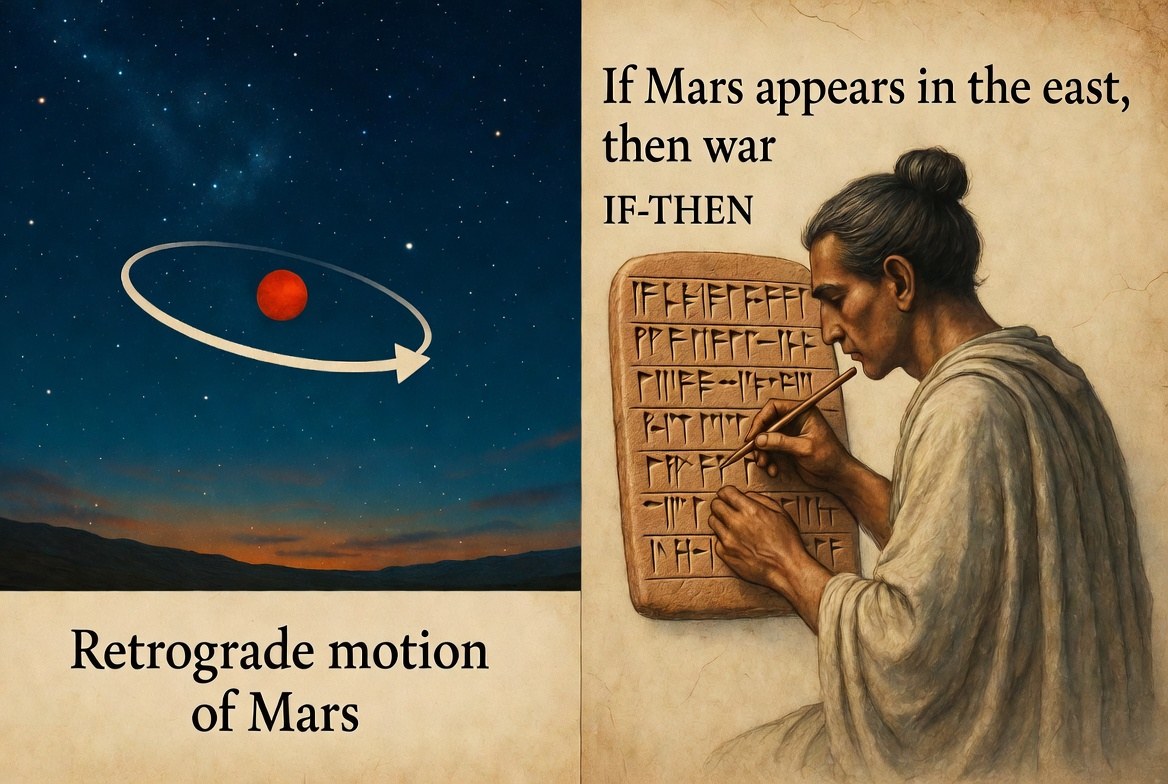
They linked the red planet to Nergal, a fierce god of war, plague, and the underworld. If Mars looked strange — too bright, moving the wrong way, or standing near certain stars — the scribes wrote omens. An omen is a rule like: “If Mars does X, then the king may face war,” or “If Mars does Y, disease may come.”
Their great omen series is called Enūma Anu Enlil (“When the gods Anu and Enlil…”). It has dozens of tablets and thousands of sky omens. The last group of tablets is about stars and planets, including Mars. Another work, MUL.APIN, is like a sky handbook: which stars and planets rise when, and what that means for the calendar.
Later Babylonian astronomers went further. They used numbers and tables to predict where Mars would be, without needing a telescope or a picture of space. They cared about timing and patterns more than about a geometric model of the solar system.
So what they “said” about Mars was practical and serious: Mars is a dangerous red star that walks an odd path; its path can be measured; and its oddities warn the state about war and misfortune. That is why Babylon wins for volume of talk about the planet before Jesus.
Keep these
Mars as Nergal’s sign. The red color matched a war-and-death god. Sky events were read as divine signals, not random physics.
Clay-tablet diaries. Positions, brightness, and loops were logged for centuries — the densest ancient Mars record we still have.
Prediction by arithmetic. They built numerical schemes to forecast planetary events, which later helped Greek astronomers.
Omens for kings. Mars talk was state business: war, revolt, plague, and the safety of the ruler.
If you asked a Babylonian priest about Mars, he would not say “a rocky planet.” He would say something closer to: “That red light is the war-god’s star. Watch how it moves. Write it down. If it acts strangely, the kingdom should prepare for trouble.”
How omen texts actually worked
An omen text is not a story and not a science textbook. It is a giant list of “if this happens in the sky, then expect that on earth.” Priests used it like a reference manual when something unusual appeared.
Almost every omen has two halves. The first half (the protasis) describes a sky event: “If Mars is bright,” “If Mars stands in such-and-such constellation,” “If Mars turns back.” The second half (the apodosis) gives an earthly meaning: war, peace, harvest, the king’s health, revolt, or foreign attack.
The logic is conditional, not causal in our modern sense. The scribes were not saying “Mars causes war with a laser.” They were saying the gods write messages in the sky, and trained experts can read the code. Mars was one of the strongest “danger” signals because of its red color and its strange loops.
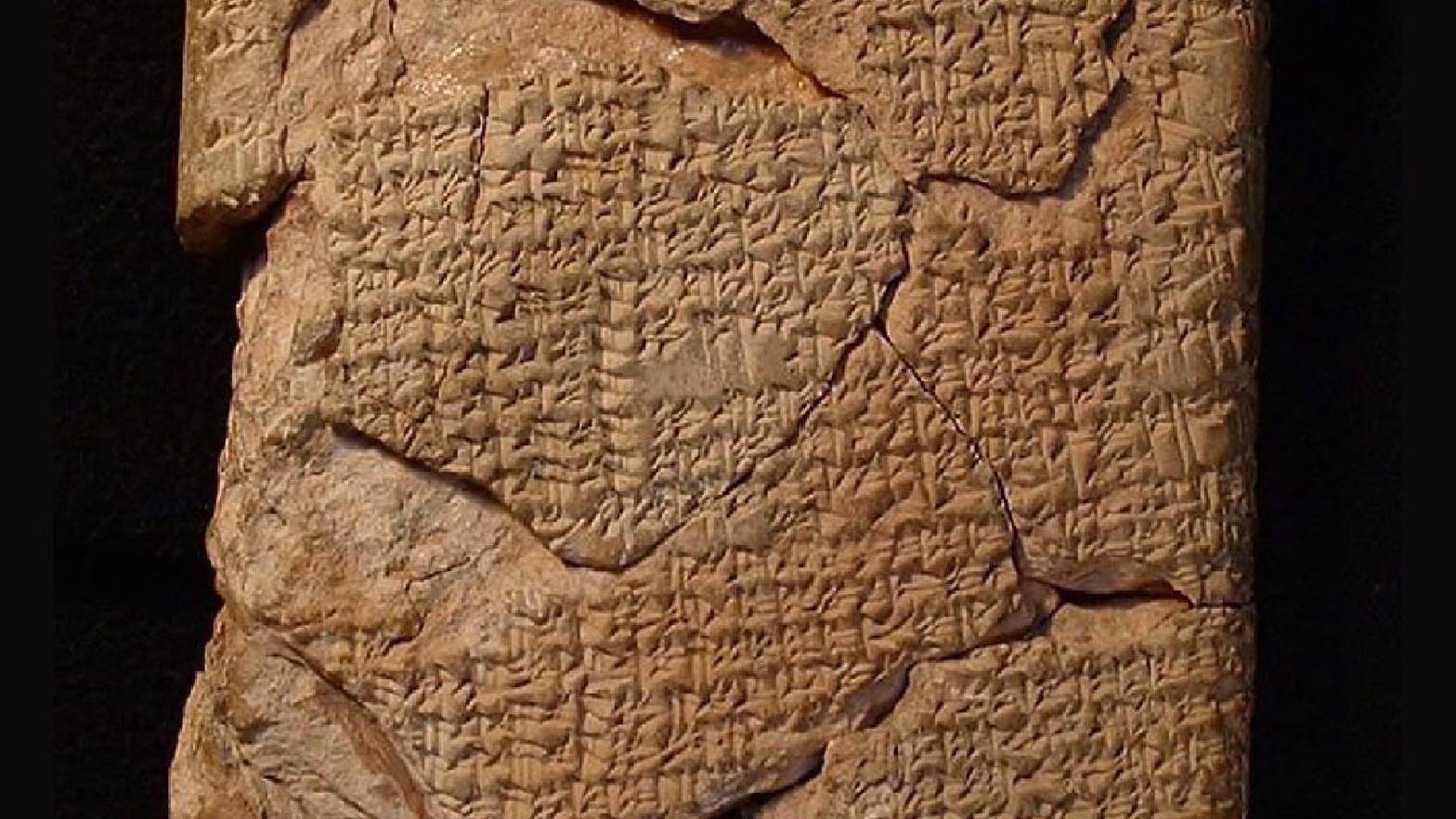
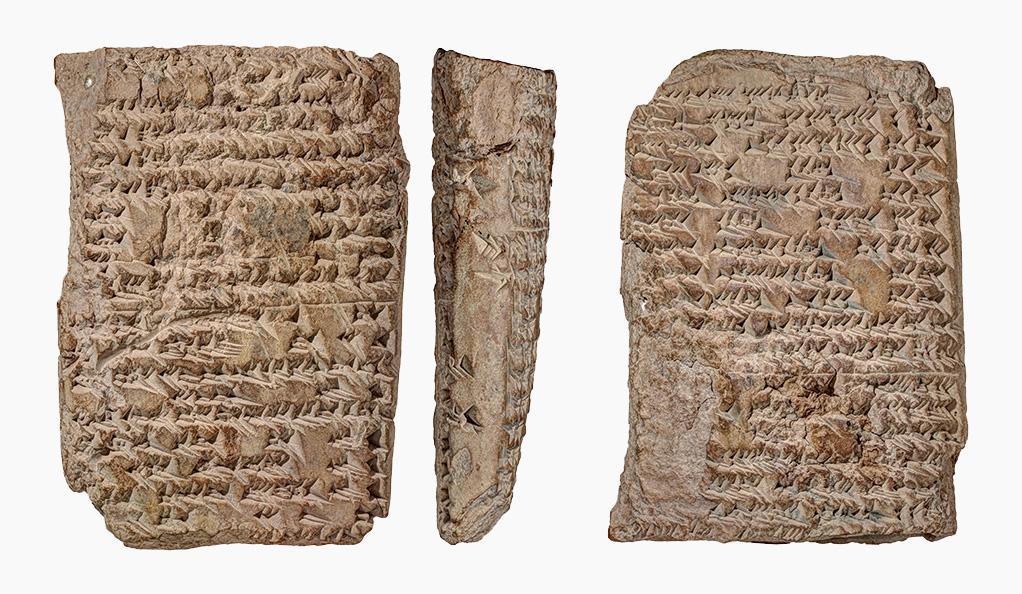
Omens were collected into long series on clay tablets. A full library series could have dozens of tablets and thousands of individual if/then lines. Priests copied them carefully so each generation kept the same handbook.
When a real sky event happened, a court scholar might write a letter to the king: “We observed X. According to the series, it means Y. Here is what the king should do.” So omens were political tools as much as religious texts.
Over time, Babylonians also made Astronomical Diaries — night-by-night records of planets, weather, prices, and news. Those diaries fed better predictions. The omen handbook said what an event meant; the diaries said what actually happened in the sky on a given night.
Enūma Anu Enlil
The main celestial omen encyclopedia. Roughly 70 tablets. It starts with the Moon, then the Sun, then weather and atmospheric signs, and ends with stars and planets. Planetary tablets include Mars. Scholars estimate thousands of omens in the whole series. The title means something like “When Anu and Enlil…” — the great gods who set the sky’s rules.
MUL.APIN
A practical sky handbook (name from its first line about the star Plough). It lists constellations, rising times, and planetary behavior. Think of it as the “how the sky is organized” manual that sits next to the omen encyclopedia.
Astronomical Diaries
Day-to-day logs from Babylon: planet positions, eclipses, river levels, market prices, and historical notes. These are not omens themselves — they are the raw observations that made omen reading and later math prediction more accurate.
Mars / Nergal link
In omen language Mars is often tied to Nergal. So a Mars omen is not neutral weather news. It already carries a tone of war, plague, death, or hard judgment — which is why kings paid attention.
If
Then
Why they read it that way
If Mars is very bright / fiery
Hard times, war, or royal danger may approach
Brightness was read as intensity of the god’s attention — louder signal, bigger stakes.
If Mars turns back (retrograde) near a key star region
Enemy movements, unstable borders, or conflict in that “direction” of the realm
The odd reverse path felt like a disruption in the normal order — so politics and armies might disrupt too.
If Mars approaches or stands with another planet
Combined messages (for example war + disease, or two powers colliding)
Planets “meeting” were read like two gods conferring — double meaning, double risk.
If Mars disappears / is delayed in first visibility
Confusion, failed plans, or the land not “seeing” what is coming
Missing an expected appearance broke the calendar of signs — a bad kind of silence.
Why it matters. These texts are why Babylon “spoke about Mars the most.” Not because one poet loved the red planet, but because generations of specialists kept writing Mars into state religion, prediction, and policy. Later Greek astronomers inherited the careful watching — even when they dropped the omen meanings.
How an omen works: sky event → written if/then rule → warning for the king. Educational reconstruction. Left: Mars looping backward in the night sky (retrograde). Right: a scribe presses a stylus into clay, writing the classic omen shape “If Mars…, then war….” This is the mental model of Babylonian omen science: observe, encode, advise.Real cuneiform omen tablet surface — dense wedge writing, line after line. Photograph of an ancient clay tablet covered in cuneiform. Each small wedge group is part of a word. Omen tablets look like this: packed text, often damaged, copied by professionals. Eclipse and planetary omens lived on surfaces just like this one.A complete small tablet: front, edge, and back — how omens were stored. Museum-style views of one tablet from three angles. You can see thickness, hand-pressed wedges, and how much text fits on a palm-sized slab. Priests kept whole cabinets of such tablets as reference libraries.
Most total writing about the planet Mars before Jesus.
02 · Greece and the eastern Mediterranean
Greek scientists & thinkers
About 400–100 BCE
Greek thinkers took sky data (including ideas from Babylon and Egypt) and asked a new kind of question: what shape of motion would make Mars look the way it does from Earth? They wanted a model you could draw and reason about.
Names they used. Ares’s star (Pyroeis, “the fiery one”), the red wandering star
What they said
Greeks already knew Mars was a “wandering star” (planetēs). Unlike fixed stars, it drifts through the zodiac. Sometimes it even seems to reverse direction. That reverse loop is hard to explain if everything simply circles Earth at one steady speed.
Eudoxus of Cnidus (4th century BCE) built one of the first Greek geometric models. He imagined nested spheres turning around Earth. For Mars, extra spheres could create a figure-eight path on the sky (the hippopede), which helped imitate retrograde motion. His book On Speeds is lost, but later writers describe the system.
Aristotle used and expanded that sphere picture. He also reported a key observation: Mars once disappeared behind the Moon (an occultation). That told him Mars is farther away than the Moon. Simple idea, huge step: planets sit at different distances.
Callippus improved the sphere counts. Critics still noticed a problem Mars made obvious: the planet gets much brighter and dimmer. Pure same-distance spheres struggle with that. So later Greeks tried other geometry.
Apollonius developed tools like epicycles (small circles riding on big circles) and eccentric circles (a circle whose center is slightly off Earth). These ideas later became standard for explaining Mars’s loops.
Hipparchus (2nd century BCE), often called the greatest observer of Greek antiquity, pushed hard for numbers that match the sky. He used Babylonian-style data and showed that many popular planetary theories still failed the details — Mars included. He did not leave a finished Mars theory the way Ptolemy later would, but he set the rule: a true model must predict carefully, not only look elegant.
In plain terms, Greek science before Jesus said: Mars is a real body in a layered cosmos; its backward loops are mathematical problems; and good astronomy must fit observations, not only philosophy.
Keep these
Geometry of the sky. Spheres, epicycles, and off-center circles tried to copy Mars’s path on paper.
Distance clue. Aristotle’s Moon-over-Mars occultation proved Mars is beyond the Moon.
Brightness problem. Mars getting bright and faint showed pure equal-distance spheres were incomplete.
Data discipline. Hipparchus demanded models that match measured times and positions.
Greek thinkers treated Mars like a puzzle: “If Earth is in the middle, what spinning circles would make that red light stop, reverse, and brighten?” They mixed philosophy with math and borrowed careful records from the East.
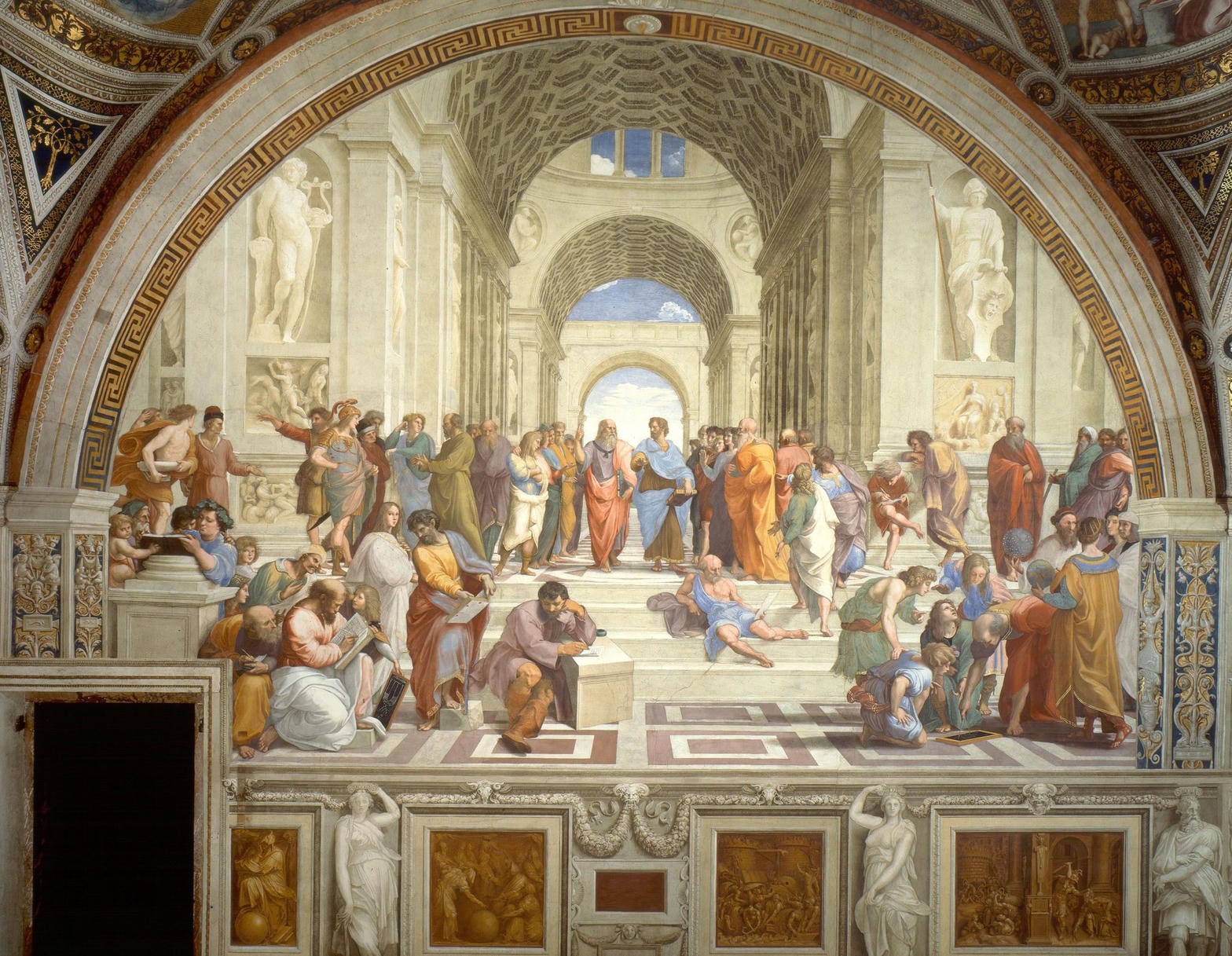
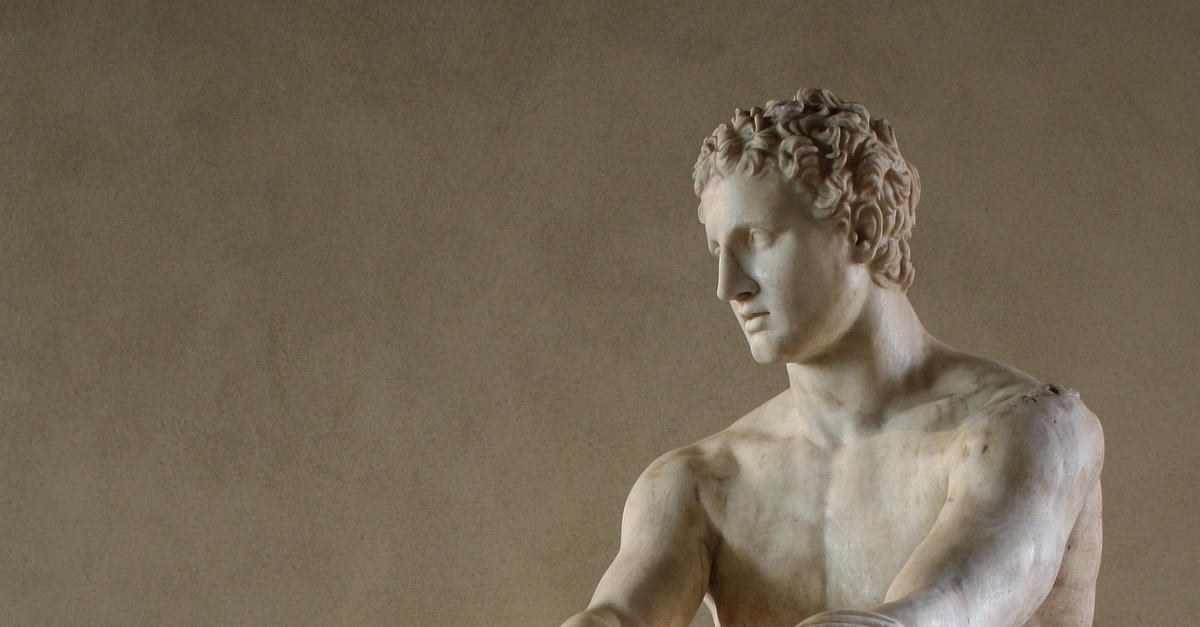
Raphael’s School of Athens — later image of Greek philosophical conversation. Renaissance painting of Plato, Aristotle, and other thinkers. Not a photo of ancient life, but a famous visual for the culture that turned Mars into geometry.Mars as a disk — ancients only saw a point, but the loops were already obvious. Even a small telescopic view shows ice and markings. Greek models needed to explain why the red point sometimes reversed and brightened.Marble Ares — the myth name attached to the “fiery” planet. Close view of a classical war-god statue. Greek astronomy still used mythic names: the red wanderer was the star of Ares.
Best pre-Jesus mathematical talk about how Mars moves.
03 · Early Greece / Trojan War legend
Homer’s Ares (the war god)
About 8th century BCE (Iliad)
When people say “Mars” as a god, they often mean the Greek Ares rebranded in Latin. The single most famous pre-Jesus storyteller of that war god is Homer. In the Iliad, Ares is not a quiet planet. He is rage, blood, panic, and the messy noise of battle.
Names they used. Ares, later equated with Roman Mars
What they said
In the Iliad, Ares joins the Trojan War as a god who loves fighting. Homer paints him as fierce but not always wise. Other gods argue with him. Athena often outthinks him. Zeus sometimes scolds him. So Greek culture already had a complicated feeling about pure war energy: powerful, needed, but also dangerous and a bit despised.
One famous scene: the hero Diomedes, helped by Athena, wounds Ares. The god of war screams and flees to Olympus. That is a huge statement in a warrior poem. Even Ares can be hurt and humiliated. War is not always glorious; it can be chaotic and shameful.
Homer’s Ares is surrounded by panic and terror (personified forces). When Ares is on the field, the poem sounds like clashing metal and screaming. That emotional portrait stuck for centuries. Later Greek writers kept using Ares as a symbol of violent conflict.
Important: Homer is talking about the god, not writing astronomy. Still, the red planet was later named for this same war power (Greek Pyroeis / star of Ares; Roman Mars). So the “voice” that shaped how Western people feel about the name Mars is partly Homer’s battlefield poetry.
Compared with Roman Mars (next section), Homeric Ares is less of a noble father-protector and more of a wild force. That difference matters when you read ancient art and myths.
Keep these
War as a personality. Ares is battle-lust, not careful strategy — heat more than honor.
Gods can be wounded. Diomedes wounding Ares shows war’s chaos even above the human level.
Mixed respect. Greeks needed war but often disliked pure Ares-energy compared with Athena’s smart warfare.
Name that stuck. The planet’s war-god name rides on this mythic tradition.
Homer basically said: the spirit of war is loud, bloody, and not always wise. That character — Ares — is the Greek face of what Romans later called Mars. Homer is not counting stars; he is making the war god feel real.
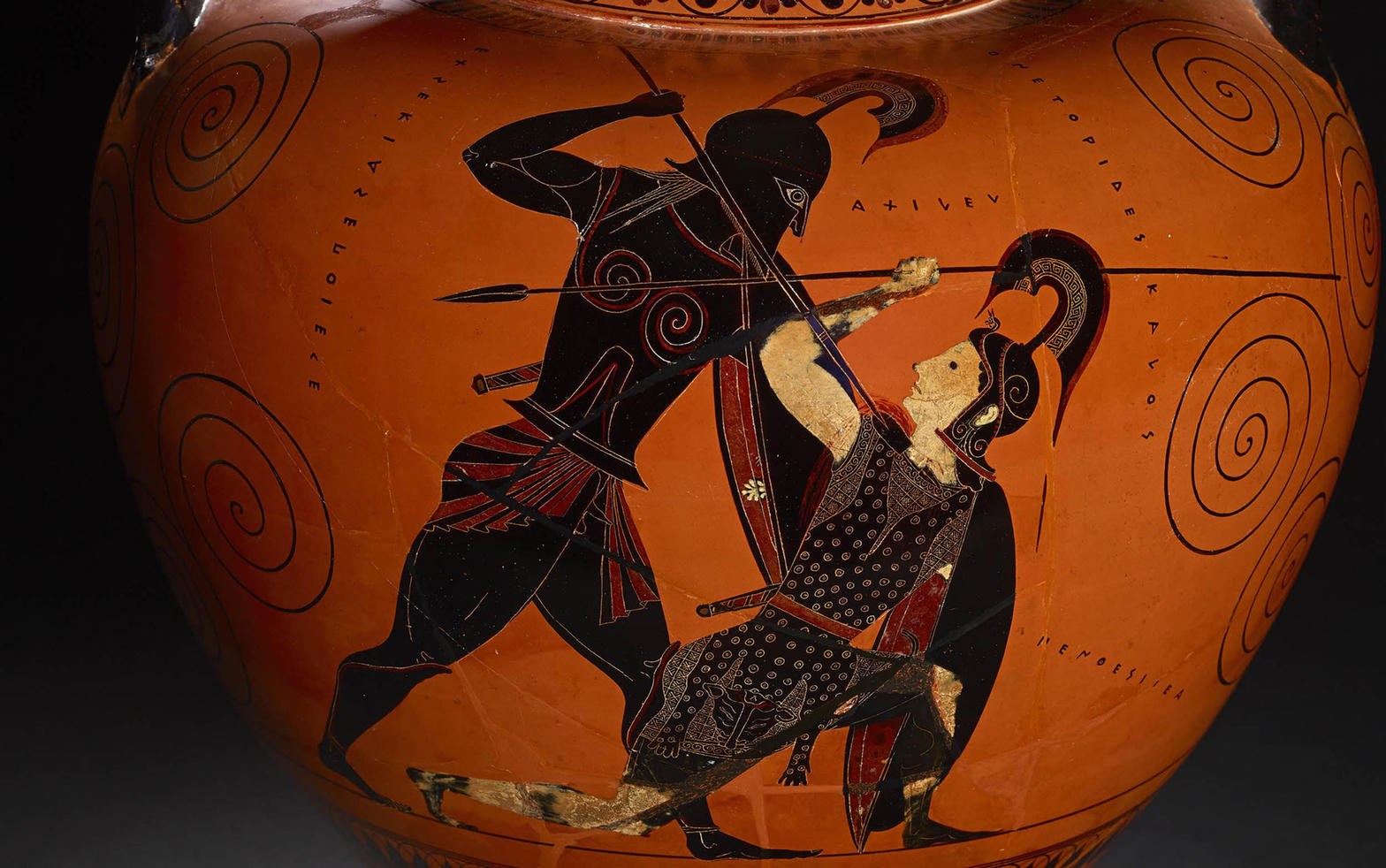
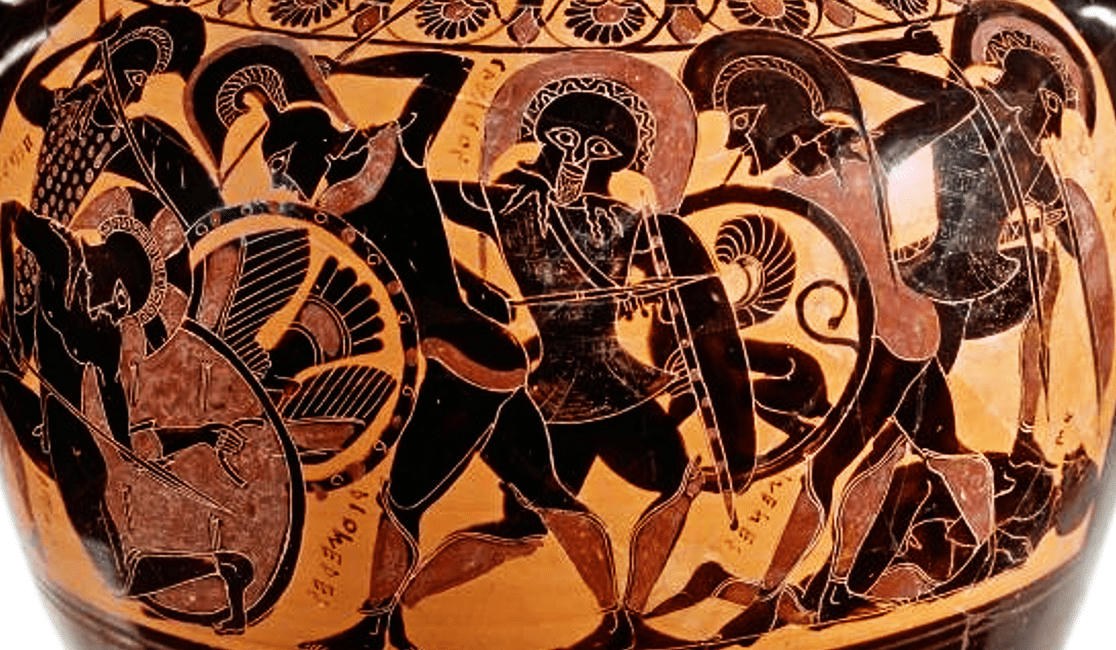
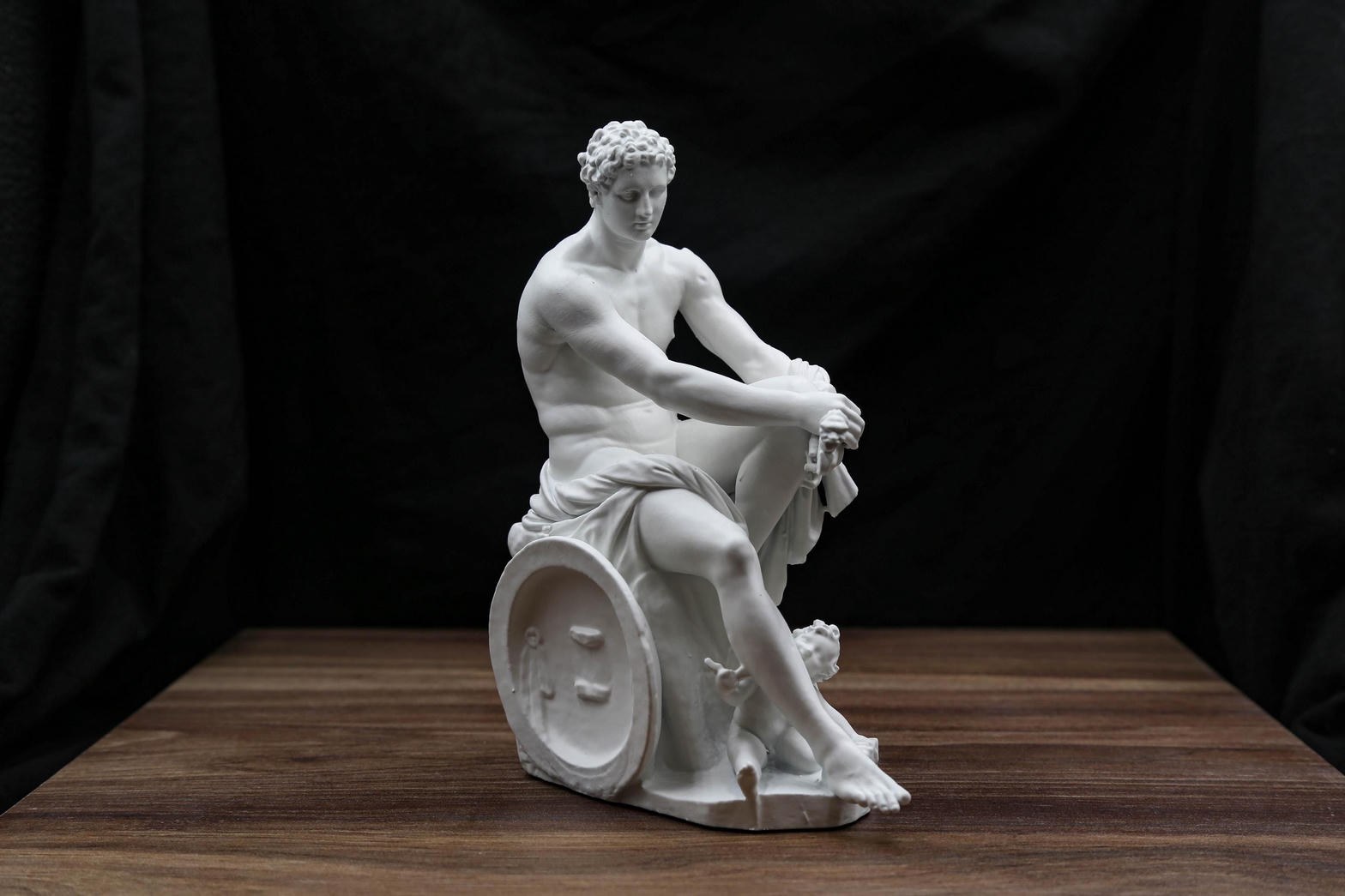
Black-figure vase of Trojan combat — Homer’s battlefield world. Greek pottery painting of armored fighters. This is how Greeks visualized the war story where Ares thrives on slaughter and noise.Shield wall chaos — the soundscape of Homeric Ares. Crowded warriors with big round shields. Homer’s language of clashing bronze matches images like this.Ludovisi Ares: seated war god, shield, and Cupid-like figure at his feet. Famous classical statue type of a resting warrior god. Later ages used this body language for both Ares and Mars.
Most famous literary portrait of the war god before Jesus.
04 · Italy / Roman world
Early Rome and the god Mars
Early Rome through the late Republic (to ~1st c. BCE)
Rome did not treat Mars as a second-rate god. Mars was near the top of Roman religion: war, yes, but also fields, boundaries, and the founding family of the city. The calendar itself was a Mars lesson — especially March and October, the bookends of the fighting season.
Names they used. Mars, Mavors, Gradivus, Mars Ultor (late Republic / Augustus)
What they said
Romans said Mars was the father of the twins Romulus and Remus. That makes Mars the divine ancestor of Rome itself. When Romans marched to war, they were fighting under their father’s star and name.
The month of March (Martius) was named for him. In early Roman timekeeping, March opened the year. It was planting time and the start of military campaigning. October closed the campaign season with horse races and the purifying of weapons.
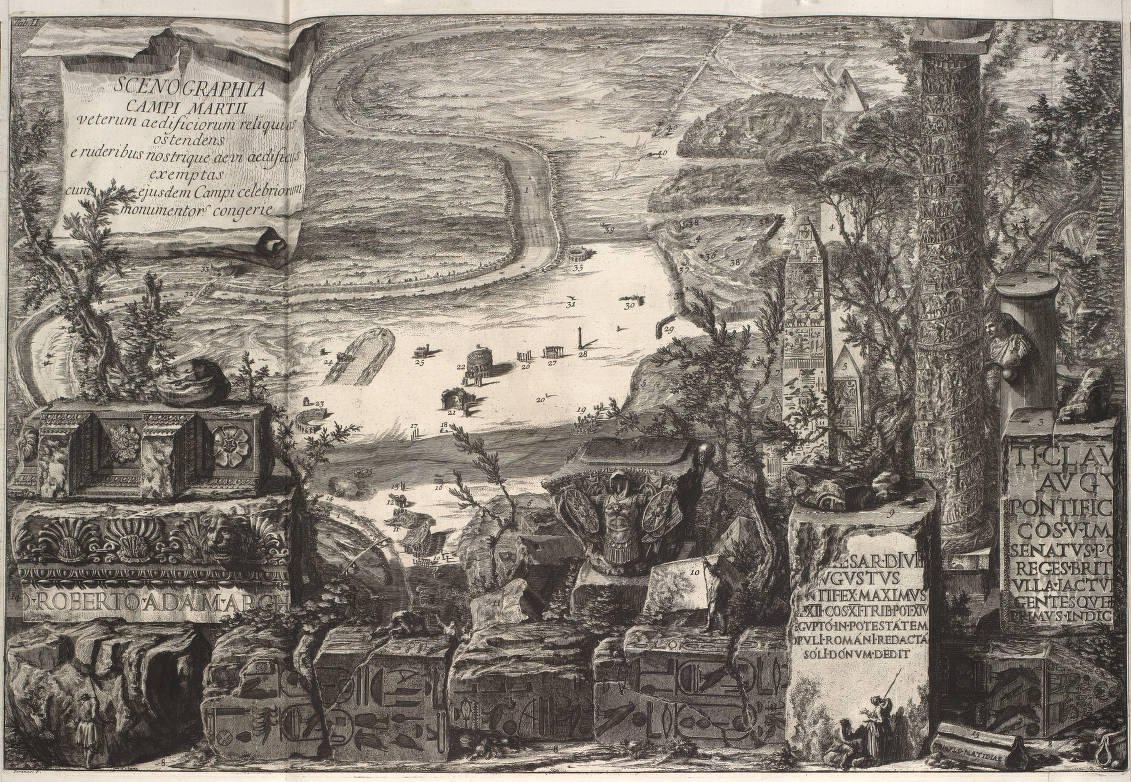
The Campus Martius (“Field of Mars”) was a real floodplain of the Tiber used for army training, assemblies, and rites. Mars’s name sat on the map of the city.
Roman Mars was often more dignified than Greek Ares. Greeks could mock Ares; Romans needed Mars as protector and ancestor. Under Augustus (just before and around the birth of Jesus), Mars Ultor (“Mars the Avenger”) became a state symbol of restored order after civil war — but even earlier, Mars was central.
Writers and poets of the late Republic (for example Virgil, who died in 19 BCE) wove Mars into Rome’s destiny stories. The message is political as well as religious: Rome’s power is rooted in a sacred war-guardian.
So early Roman speech about Mars says: this god is our father, our month, our field, our army’s guardian, and the face of legitimate force for the city.
Keep these
Father of Rome. Mars sires Romulus and Remus — the city’s origin story.
Calendar god. March opens war and farming; October closes the season with rites.
War + fields. He guards weapons and also agricultural boundaries and vitality.
Higher status than Ares. In Rome, Mars is honored; in Greece, Ares is often distrusted.
If Babylon wrote the most about the red star, Rome talked the most about Mars as a national father-god. “Mars” to a Roman meant: our ancestor, our fighting season, our festivals, and the power that keeps the city safe.
Roman Mars festivals in detail
Romans did not only pray to Mars in emergencies. They scheduled him into the year. March woke the god of war and fields; October put weapons to bed. Below are the main rites you should know — explained simply, with images and reconstruction sketches.
Think of a war year shaped like a book. March = opening chapter (dance, trumpets, sacred shields). Summer = campaigns. October = closing chapter (horse race, sacrifice, purifying arms). Mars is present at both covers of the book.
The Salii (leaping priests)
Salii · Mainly March (also connected rites later in the year)
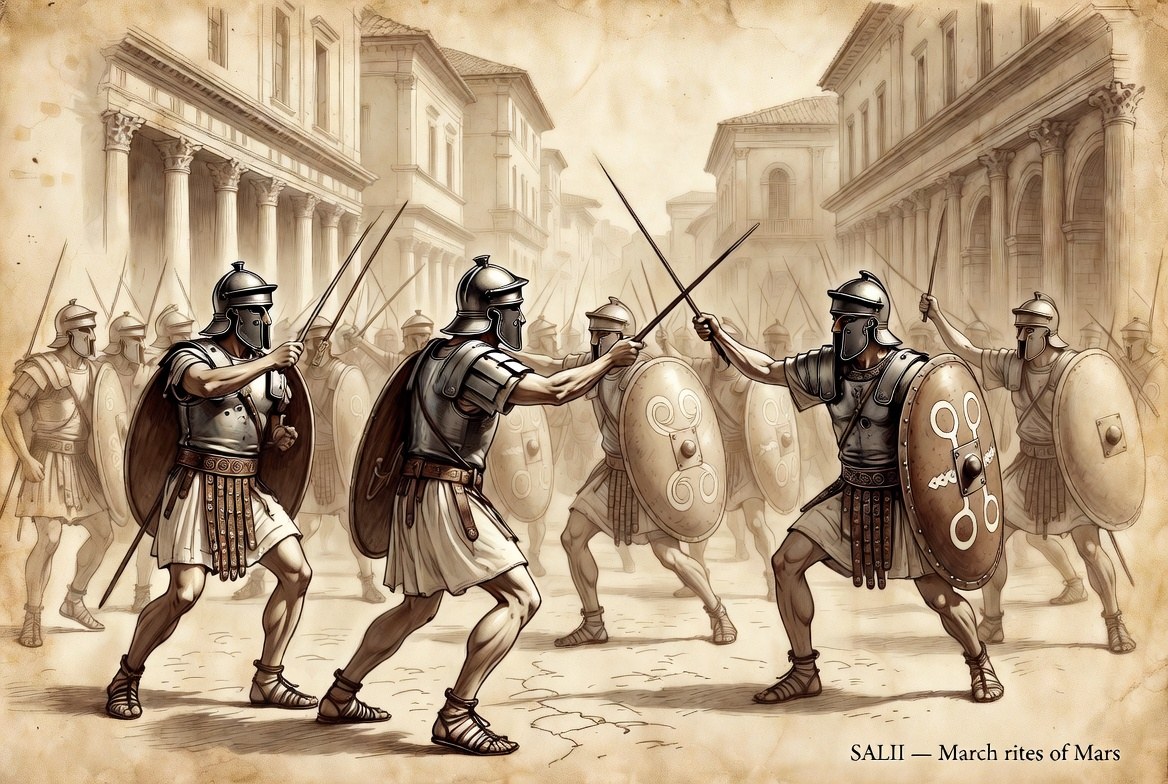
Two colleges of priests (often linked to Mars and to Quirinus) put on archaic armor — old-fashioned helmets, breastplates, and special figure-eight shields called ancilia.
They processed through the city streets, dancing a ritual war dance and striking the shields while chanting very ancient hymns (the Carmen Saliare). Even later Romans found the words hard to understand — that is how old the rite was.
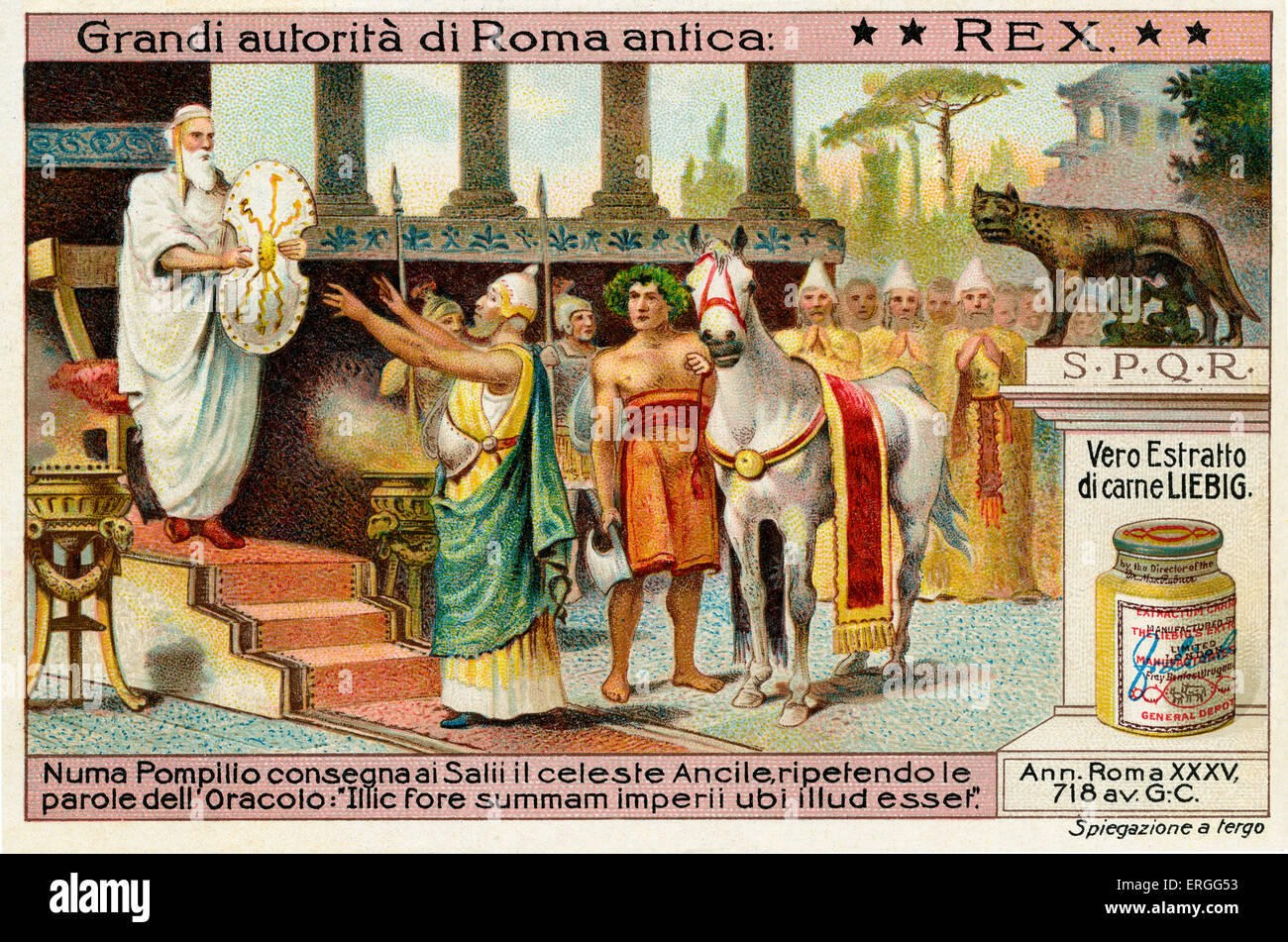
Legend said one original shield (the ancile) fell from heaven in the time of King Numa. To protect the real one, eleven copies were made so thieves could not steal “the” divine shield. The Salii guarded and displayed this set.
The dance was not entertainment. It was a public “turning on” of Mars’s power at the start of the campaigning season — noise, metal, motion, and memory of the kings.
Why it mattered. The Salii made Mars visible in the streets. Every citizen could see that war season had sacred permission — not only political orders.
Sketch: Salii war-dance in March — shields, helmets, public streets. Educational reconstruction of the Salii. Priests in archaic armor leap and clash in a city street. The figure-eight style shields nod to the sacred ancilia.
Sacred shields of Mars
Ancilia · Carried in Salian processions (especially March)
The ancilia were the holy shields of the Salii. Ancient writers describe an unusual shape (often understood as a figure-eight / indented oval rather than a plain round hoplite shield).
Myth: heaven sent one shield as a pledge that Rome would endure. Numa ordered copies. The true and the copies moved together in ritual so the original stayed hidden in plain sight.
Carrying and clashing the ancilia was like carrying the city’s luck and Mars’s favor through the neighborhoods.
Why it mattered. Rome’s safety was imagined as a physical object you could parade — a mobile guarantee of divine backing.
Classic illustration: Numa gives the celestial ancile to the Salii. Early modern educational print of a Roman foundation legend. King Numa holds a decorated figure-eight shield while Salii attend.
Trumpet purification
Tubilustrium · March 23 (and a related rite in May)
The tubae — war trumpets / sacred trumpets — were ritually cleaned and dedicated.
Sound mattered: Roman armies used trumpet signals. Purifying the instruments meant the “voice” of war was made holy before the season’s noise began.
It sits in the same March cluster as other Mars-related openings of the year.
Why it mattered. Even the soundscape of war was put under religious control. Mars’s month was about preparing the whole machine of campaigning.
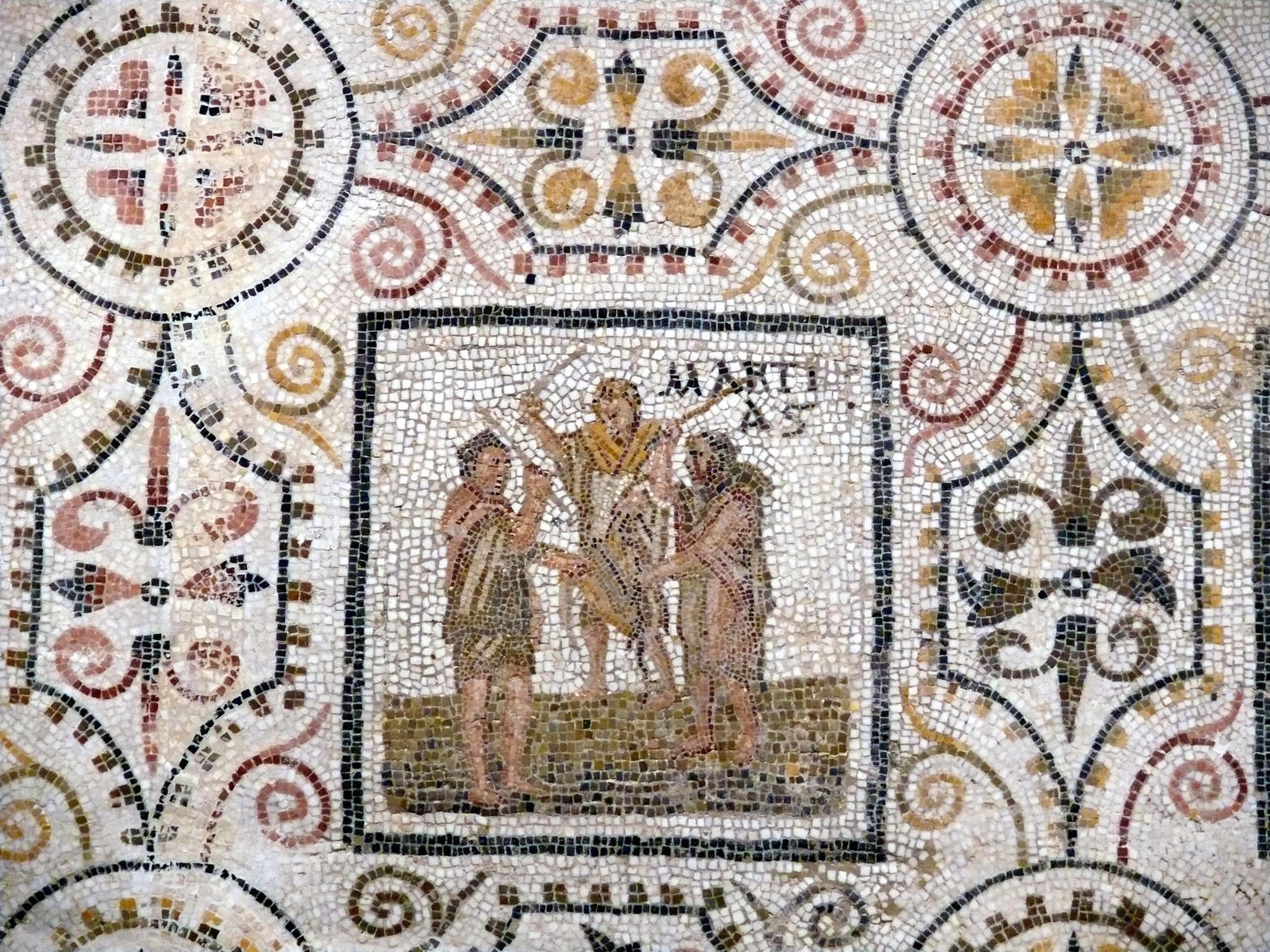
Mosaic of Martius (March) — the month that belongs to Mars. Floor mosaic with the Latin label MARTIUS. March was Mars’s own month, packed with opening rites for war and fields.
Field of Mars
Campus Martius · Year-round training ground; special rites in war season
Outside the old sacred city boundary (pomerium), the Campus Martius was where armies could assemble with weapons — something restricted inside the city’s religious heart.
Citizens trained, voted in some assemblies, and held festivals here. Over centuries it filled with monuments, but the name kept Mars on the landscape.
October rites (including the October Horse) were tied to this field — war’s home ground.
Why it mattered. Mars was not only in temples. He owned a whole district of public life where politics and military practice met.
Piranesi’s grand engraving of the Campus Martius and its monuments. 18th-century archaeological reconstruction of the Field of Mars — a huge sacred-military plain that still carried Mars’s name.
The October Horse
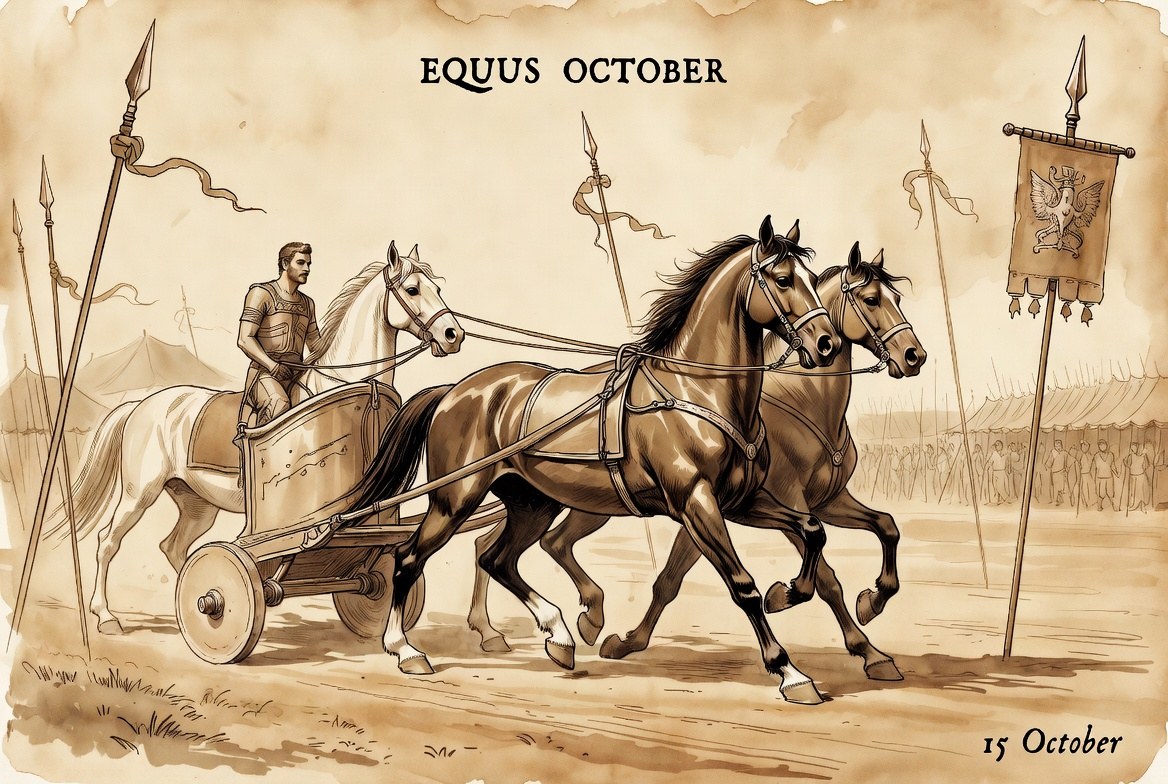
Equus October · October 15
A two-horse chariot race (biga) was held on the Campus Martius.
The right-hand horse of the winning team was sacrificed to Mars — a rare and serious horse sacrifice in Roman religion.
The head and tail had special fates in the ritual geography of the city (traditions speak of contests over the head and of the tail being rushed to the Regia). Details vary, but the core is clear: the best war-animal of the race is given to Mars as the season ends.
This is harvest-time and army-return time. The rite closes the loop opened in March.
Why it mattered. It turned military success and animal strength into a gift back to the god who owned the war year.
Sketch: Equus October chariot race — 15 October on the Field of Mars. Reconstruction drawing of a biga racing past spears and military banners. After the race, the right-hand horse of the winner was sacrificed to Mars.
Purifying the arms
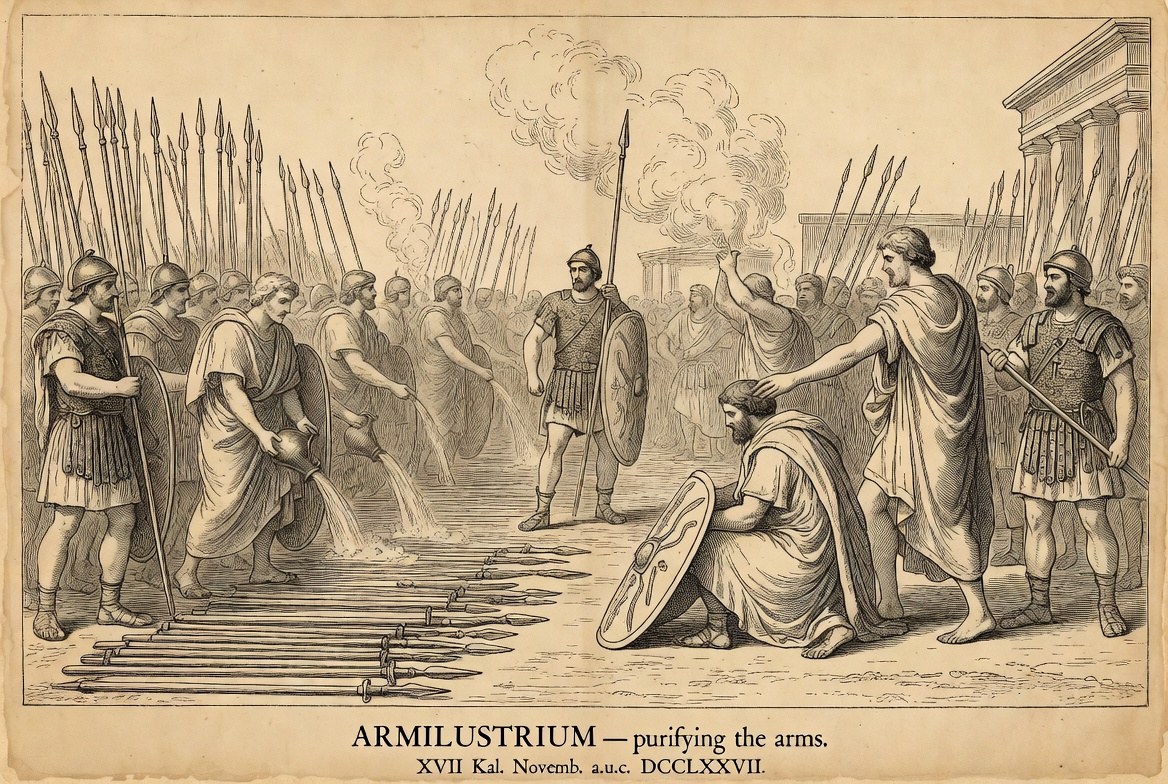
Armilustrium · October 19
Weapons and armor were ritually purified and put away for winter.
The Salii appear again in the sources for this closing of the armed year — a bookend to their March dancing.
Think of it as sacred equipment storage: the tools of killing are cleaned of spiritual pollution and rested until the next March.
Why it mattered. Rome refused to treat war as endless chaos. There was a holy on-switch and a holy off-switch, both under Mars.
Sketch: Armilustrium — washing and purifying weapons in October. Educational reconstruction: spears laid in rows, water poured, incense smoke, soldiers and priests in a public rite closing Mars’s season.
Mars the Avenger (late addition)
Mars Ultor · Temple vowed by Octavian; dedicated 2 BCE (just around the Jesus era)
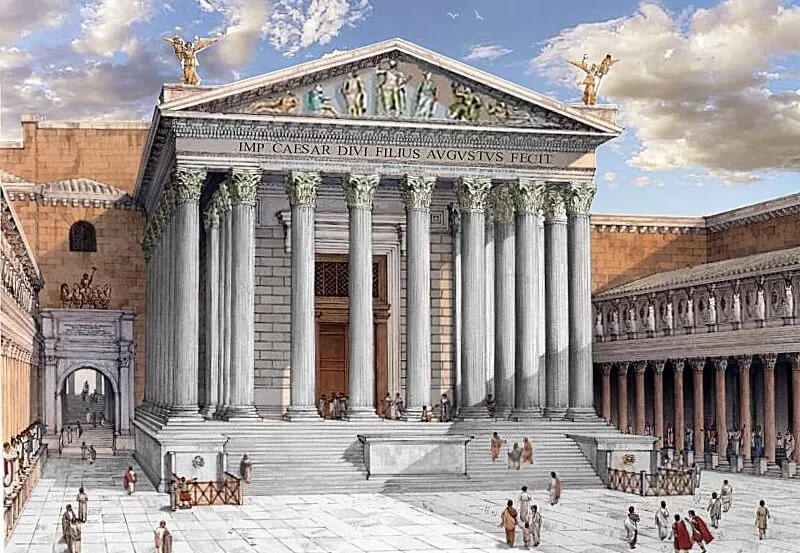
After civil war, Augustus promoted Mars Ultor — Mars who avenges wrongs and restores order.
A great temple in the Forum of Augustus made Mars a centerpiece of imperial ideology: not only wild battle, but justice through victory.
This is slightly after pure “early Republic” religion, but it shows how flexible and central Mars remained at the turn of the age.
Why it mattered. Mars became the face of state vengeance and peace-through-strength — a political upgrade of the old father-god.
Reconstruction of the Temple of Mars Ultor in Augustus’s forum. Modern historical reconstruction of a towering Corinthian temple. This is Mars as architecture at the center of imperial memory and power.
Strongest cultural obsession with the god named Mars — now with full festival season.
05 · Nile, East Asia, South Asia
Egypt, China, and India
Second millennium BCE through the 1st century BCE
Mars was not only a Mediterranean story. Egyptians, Chinese, and Indians also watched the red planet and folded it into calendars, omens, and myths. Their “speech” about Mars is different in style, but the eye-catching redness is the same.
Names they used. Egypt: Har Decher (“the Red One”), China: Yinghuo (“flickering confusion”), India: Mangala / Angaraka
What they said
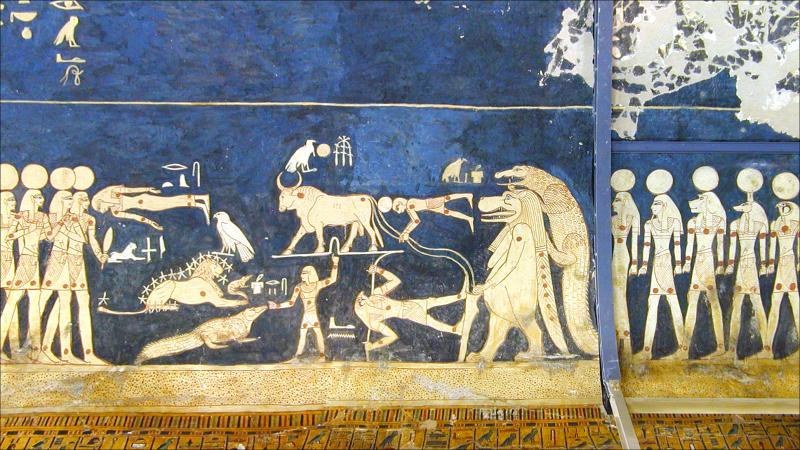
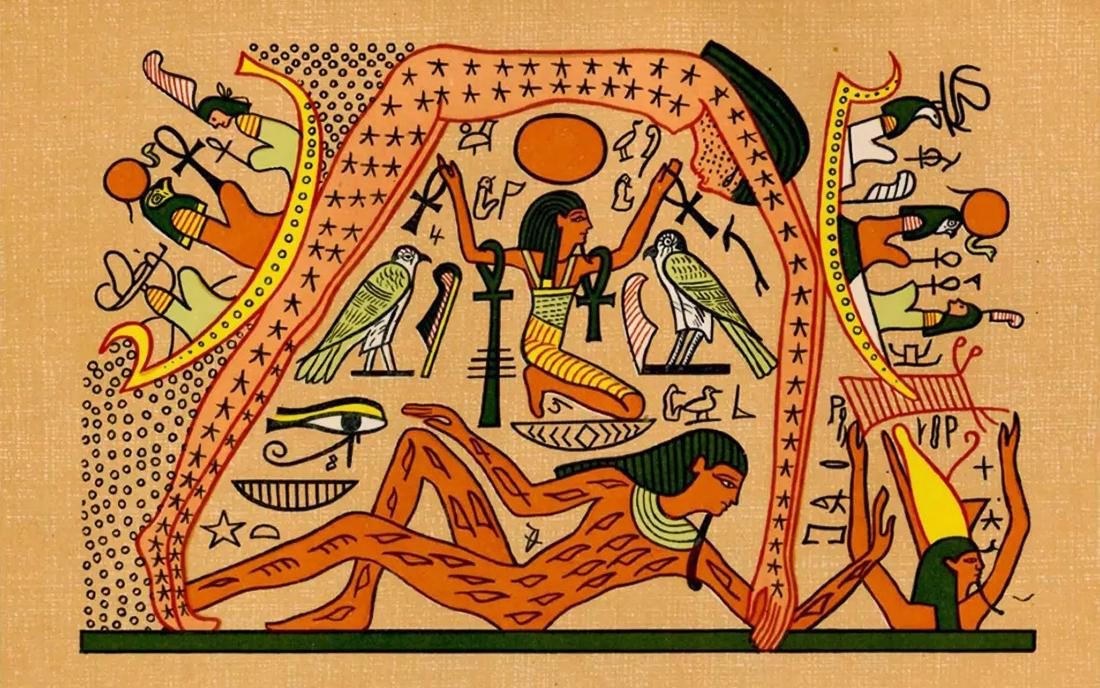
Egypt: Egyptian sky-watchers knew Mars early. By the mid-second millennium BCE they were familiar with its retrograde path. Names like Har Decher (“the Red One”) or phrases about “the one who travels backward” show they noticed color and the odd reverse motion. Egyptian astronomy mixed practical timekeeping (for seasons and Nile life) with rich religious sky pictures — star ceilings, sky goddess Nut, and decans (star groups used as night clocks). Mars was one of the moving lights in that sacred machine.
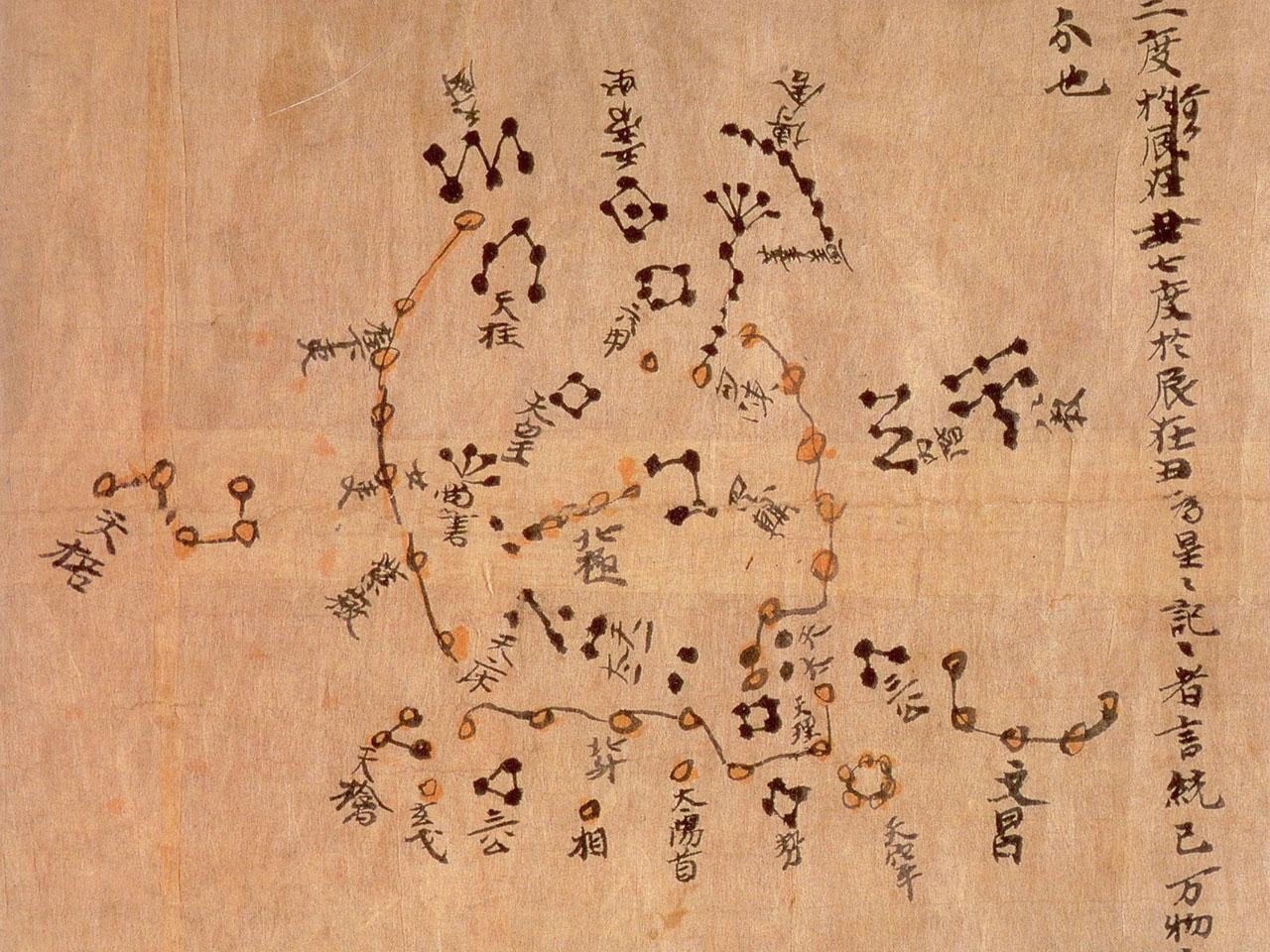
China: Classical Chinese texts call Mars Yinghuo — roughly “glimmering fire” or “flickering confusion.” Because Mars’s path looks irregular, it was read as a sign of disorder. Historians such as Sima Qian (1st century BCE) preserve rules of thumb: when Yinghuo behaves in certain ways, expect rebellion, war, disease, or a failing state. Mars could also be called a “punishment star.” Chinese astronomy was tightly tied to the emperor’s mandate: strange planets meant the court should correct itself and prepare the army.
India: In Indian tradition the planet is linked to Mangala (also Angaraka), a fierce figure associated with war, energy, and the color red. Early roots sit in older sky lore; fuller classical astrology develops over time, but the Mars–war–red connection is already ancient in spirit. Mars becomes one of the nine grahas (planetary powers) that shape fate and character in later systems.
Together these cultures prove a simple human pattern: people everywhere saw a red wanderer, named it after danger or fire or war, and used its motion to talk about order and chaos on Earth.
Keep these
Egypt: the Red One. Color + backward travel named and tracked; sky art made the heavens a temple ceiling.
China: Yinghuo omens. Irregular Mars motion = warning of political and military disorder.
India: Mangala. Red war-energy planet woven into sacred planetary systems.
Shared human pattern. Red + erratic path → fire, war, punishment, and caution across cultures.
Outside Greece and Rome, people still said versions of the same thing: “That red star is not calm. When it acts strangely, the human world may get violent or sick.” Egypt stressed the red backward traveler; China stressed confusion and punishment; India stressed fierce red power.
Egyptian tomb sky ceiling — gods, animals, and star figures. Painted astronomical ceiling. Egyptians turned the night sky into temple art. Planets like the Red One moved through a heaven crowded with sacred beings.Nut the sky goddess arched over the world — heaven as a living body. Classic Egyptian composition: Nut’s star-covered body forms the sky. This is the mythic frame in which wandering lights like Mars were watched.Chinese star chart — dots, ink lines, and constellation names. Early East Asian chart of the sky. Court astronomers used such structures to track irregular wanderers like Yinghuo (Mars).
Proof that Mars talk was global in the ancient world.