Voices · Books and film · Next: the names

IV

Voices

Who looked up, and the line they left.

The canali debate

How a word invented a world

From channels to canals — 1877 to Mariner 4

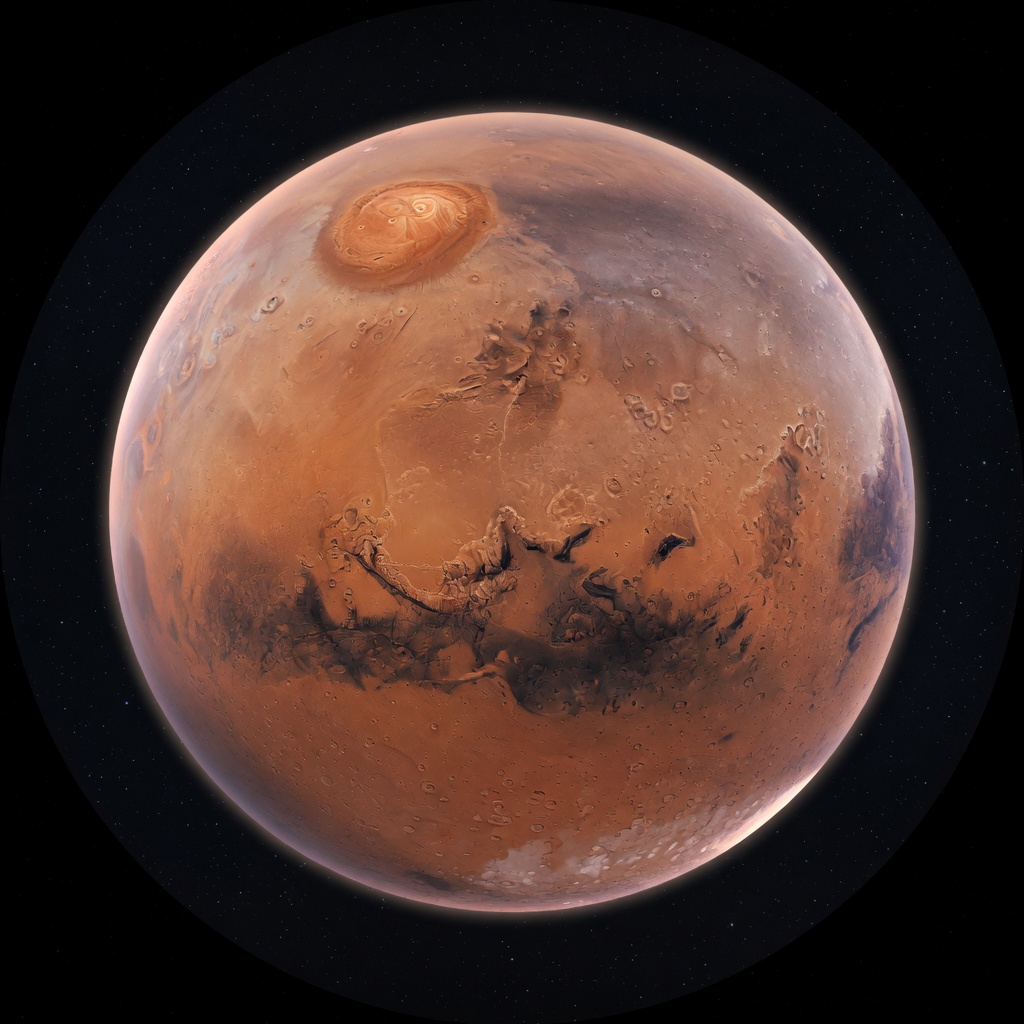
In the favorable opposition of 1877, Italian astronomer Giovanni Schiaparelli mapped Mars in unprecedented detail from Milan. Across the ochre disk he traced a web of dark, linear features and named them canali — Italian for channels or grooves, a word that can mean natural watercourses. English and French popular press often rendered it as “canals,” a word that almost always means artificial engineering.

That linguistic slip met a culture already hungry for other minds. French popularizer Camille Flammarion had spent decades arguing for a living, evolving cosmos. Then American businessman-astronomer Percival Lowell built an observatory in Flagstaff, Arizona, and made the canals a global story: a dying planet, polar snowmelt, and a planet-spanning irrigation system built by intelligent Martians fighting extinction. His books — Mars (1895), Mars and Its Canals (1906), Mars as the Abode of Life (1908) — sold a civilization into the public imagination.

Not everyone saw lines. British astronomer Edward Maunder and collaborators ran schoolboy experiments (1903) showing that the eye invents straight lines from faint blotches. In 1909, Eugène Antoniadi, using the great Meudon refractor, reported that under perfect seeing the canals dissolved into irregular natural detail. Spectroscopy whispered that Mars’s air was thin and dry. Still, popular belief outran professional consensus for decades — magazines and fiction kept the canals alive long after many astronomers had moved on.

The final public funeral came from spacecraft. Mariner 4 (1965) returned cratered, moon-like images — no cities, no geometric waterways. Later Mariners and Vikings mapped a world of volcanoes, canyons, and ancient floods, but no Lowellian grid. Carl Sagan later joked that the only intelligence required to build the canals was on our side of the telescope.

Why it still matters: the canali debate is the purest modern case study of how hope, language, instruments, and storytelling co-create a planet. Without it, Wells’s invasion, Burroughs’s Barsoom, and a century of Mars colonization fiction would look very different. The canals were wrong as geology — and permanent as culture.

  • 1877 — Schiaparelli maps canali; Hall discovers Phobos & Deimos
  • 1894–1916 — Lowell’s canal crusade at Flagstaff
  • 1903–1909 — optical-illusion experiments; Antoniadi’s counter-observations
  • 1965 — Mariner 4 ends the artificial-canal era
  • After — fiction keeps the dream; science keeps the desert
Wells & space policy

From heat-rays to budgets and fear

How an 1897 novel taught the world to rehearse the sky

H. G. Wells did not write a NASA charter. He wrote a nightmare with engineering texture: cylinders falling on England, tripods, heat-rays, black smoke, and a colonial reverse — Mars doing to Britain what European empires had done to others. That template became the West’s default script for “threat from above.”

The most famous policy-adjacent shock was not a law but a radio night. On 30 October 1938, Orson Welles and the Mercury Theatre restaged The War of the Worlds as breaking news. Some listeners, catching it mid-broadcast, believed an invasion had begun. Newspapers amplified “panic”; later historians debate the scale — but the episode fixed a lesson in every media and defense mind: the public can be mobilized (or terrified) by a story that sounds like fact. The FCC and networks grew more cautious about fake bulletins; Congress paid attention; and “Martian invasion” entered the vocabulary of psychological warfare and media literacy.

Indirectly, Wells-shaped culture greased the rails for real space policy. When rocket pioneers and Cold War planners sold missiles, satellites, and moonshots, audiences already possessed a shared language of orbital threat and planetary destiny — half scientific, half Wellsian. Invasion fiction fed air-defense imagination; colonization fiction (Bradbury, Clarke, later Robinson and Zubrin) fed the opposite pole: Mars not as invader but as destination. Von Braun’s technical Mars Project and mid-century Collier’s / Disney space spectacles spoke to a public trained by SF to find multi-stage fleets plausible.

In the modern era, Wells’s shadow splits: security culture still uses “asteroid / alien / surprise from space” as a narrative cousin of the tripod; exploration culture answers with Watney-style competence and Zubrin’s “Mars is the New World.” Policymakers rarely cite Wells in white papers — but budgets, agency storytelling, and public consent still ride on emotional scripts first stress-tested in 1898 serials and 1938 living rooms.

One-line inheritance: Wells taught democracies that outer space is not empty scenery — it is a stage where fear, empire, science, and survival arguments compete for the next appropriation.

Italy

Where the “canals” began

Giovanni Schiaparelli

Mars maps & canali · Brera Observatory, Milan

“I have been able to distinguish a large number of dark lines of remarkable straightness… which I have designated by the name of canali.” — Giovanni Schiaparelli, observational reports on Mars, 1877–1880s (English translation)
“These canali may be compared to rivers… but they form a network so geometric that the mind is drawn, almost against its will, toward the idea of design.” — Schiaparelli, published Mars descriptions, c. 1878–1888 (as summarized in contemporary astronomy literature)

Canali in Italian meant channels or grooves — natural features. English “canals” implied artificial waterways. That single mistranslation helped invent modern Martian mythology.

France

Plurality of worlds

Camille Flammarion

La planète Mars · La pluralité des mondes habités (1862)

“We can however hope that since the world of Mars is older than our own, its inhabitants may be wiser and more advanced than we are.” — Camille Flammarion, on Martian civilization, c. 1892 (La planète Mars era)
“Terrestrial life is not the type of other lives. An unlimited diversity reigns over the universe.” — Camille Flammarion, on plurality of life forms, 1862 (La pluralité des mondes habités)
“Life is earthly on the Earth, Martian on Mars… that is to say, appropriate to each habitat.” — Camille Flammarion, c. 1862–1892

Bernard le Bovier de Fontenelle

Entretiens sur la pluralité des mondes

“Behold a universe so immense that I am lost in it. I no longer know where I am. I am just nothing at all. Our world is terrifying in its insignificance.” — Bernard le Bovier de Fontenelle, Conversations on the Plurality of Worlds, 1686 (spirit of the text’s cosmic humility)
“Each star may be a sun to someone; each night is full of possible Earths.” — Spirit of Fontenelle’s plurality thesis, 1686

Jérémie Périn — Mars Express

French animated SF thriller

“On Mars, the future arrived early — and it is already asking what we are willing to become.” — Thematic line from Mars Express, 2023
“In the neon canyons of a colonized Mars, every human desire is still older than the colony.” — Spirit of Mars Express, 2023

Gustave Le Rouge

Le Prisonnier de la planète Mars · La Guerre des vampires

“Between Earth and Mars there is only night — and the courage to cross it.” — Spirit of Gustave Le Rouge’s Martian adventures, 1908–1909
“I was a prisoner not of chains, but of a sky that would not open twice.” — Spirit of The Prisoner of the Planet Mars (Le Prisonnier de la planète Mars), 1908

United Kingdom

Invasion, wonder, hard SF

H. G. Wells — The War of the Worlds

England · the template for every Mars invasion story

“No one would have believed in the last years of the nineteenth century that this world was being watched keenly and closely by intelligences greater than man’s and yet as mortal as his own.” — H. G. Wells, The War of the Worlds, 1898 (opening; serialized 1897)
“Yet across the gulf of space, minds that are to our minds as ours are to those of the beasts that perish, intellects vast and cool and unsympathetic, regarded this earth with envious eyes, and slowly and surely drew their plans against us.” — H. G. Wells, The War of the Worlds, 1898
“By the toll of a billion deaths man has bought his birthright of the earth, and it is his against all comers; it would still be his were the Martians ten times as mighty as they are.” — H. G. Wells, The War of the Worlds, 1898

C. S. Lewis — Out of the Silent Planet

Mars as Malacandra · Cosmic Trilogy

“It was not always so. Once we knew the Oyarsa of your world—he was brighter and greater than I—and then we did not call it Thulcandra. … He became bent.” — C. S. Lewis, Out of the Silent Planet, 1938
“We are all a bent race. We have come here to bring evil to Malacandra.” — Ransom, Out of the Silent Planet, 1938
“The weakest of my people do not fear death. It is the Bent One, the lord of your world, who wastes your lives and befouls them with flying from what you know will overtake you in the end.” — Oyarsa to Weston, Out of the Silent Planet, 1938

Arthur C. Clarke — The Sands of Mars

Hard SF colonization · Project Dawn

“It was the morning star of Mars, though for a moment he had forgotten that the brilliant point of light was his own world.” — Arthur C. Clarke, The Sands of Mars, 1951
“If we can light a second sun over Mars, then no desert is forever — and no dream is merely a dream.” — Spirit of Project Dawn in The Sands of Mars, 1951

Percy Greg — Across the Zodiac

Often called the first major SF novel set primarily on Mars

“I have crossed the abyss that divides world from world, and found on Mars a civilization that remembers what Earth has forgotten.” — Spirit of Percy Greg, Across the Zodiac, 1880
“The vessel that carries a man between planets carries also his laws, his loves, and his capacity for wonder.” — Spirit of Across the Zodiac, 1880

British screen Mars

Ridley Scott · The Martian · UK co-productions

“I’m going to have to science the shit out of this.” — The Martian, film, 2015 (screenplay Drew Goddard from Andy Weir’s 2011 novel)
“In the face of overwhelming odds, I’m left with only one option.” — Mark Watney, The Martian, 2011/2015

Germany

First contact & the Mars Project

Kurd Laßwitz — Auf zwei Planeten

Two Planets · foundation of German SF

“Between two planets, the first handshake of intelligence is not conquest — it is recognition.” — Spirit of Kurd Laßwitz, Two Planets (Auf zwei Planeten), 1897
“The Martians did not come to destroy us. They came to show us how small our politics look from the sky.” — Spirit of Two Planets (Auf zwei Planeten), 1897

Published the same year as Wells — but imagined advanced Martians as teachers, not destroyers.

Wernher von Braun — The Mars Project

Das Marsprojekt · technical dream of a fleet to Mars

“The Mars Project is not a romance of space. It is a timetable written in mass ratios and propellant.” — Spirit of Wernher von Braun, Das Marsprojekt / The Mars Project, 1952–1953
“Nature does not know extinction. All it knows is transformation.” — Wernher von Braun, space-advocacy remarks, mid-1950s–1960s

His calculations made a human Mars expedition feel like a blueprint. History also records his wartime past — the dream and the moral stain travel together.

Athanasius Kircher — Itinerarium exstaticum

Jesuit scholar · Mars among the planets

“I was carried among the fires of Mars, and saw a world whose mountains still burned with the memory of creation.” — Spirit of Athanasius Kircher, Itinerarium exstaticum, 1656
“To travel the planets in the mind is already to admit that Earth is not the whole of God’s workshop.” — Spirit of Itinerarium exstaticum, 1656

United States

Canals, chronicles, colonies

Percival Lowell

Mars · Mars and Its Canals · Mars as the Abode of Life

“That Mars is inhabited by beings of some sort or other we may consider as certain as it is uncertain what these beings may be.” — Percival Lowell, Mars, 1895
“Quite possibly such Martian folk are possessed of inventions of which we have not dreamed… Certainly we see hints at the existence of beings who are in advance of, not behind us, in the journey of life.” — Percival Lowell, Nature, 1907 (on Martian intelligence)
“If astronomy teaches anything, it teaches that man is but a detail in the evolution of the universe.” — Percival Lowell, Mars, 1895

Asaph Hall

Discoverer of Phobos & Deimos

“I have found two moons of Mars — Fear and Terror, the companions of the god of war.” — Asaph Hall on naming Phobos and Deimos, 1877
“The satellites were so close to the planet that only patience, and a wife’s insistence to keep looking, revealed them.” — Spirit of the Phobos & Deimos discovery story, 1877 (Angeline Stickney Hall’s encouragement is part of the legend)

Edgar Rice Burroughs — A Princess of Mars

Barsoom · John Carter

“I am a very old man; how old I do not know. Possibly I am a hundred, possibly more; but I cannot tell because I have never aged as other men… I who have died two times and am still alive.” — Edgar Rice Burroughs, A Princess of Mars, 1912 (opening)
“I have never told this story. It is so weird and so improbable that I would not dare to tell it if it were not true.” — John Carter framing, A Princess of Mars, 1912

Barsoom — dying beauty

Canals, princesses, twin moons

“In the thin air of Barsoom, every breath is a wager with death — and every dawn a second birth.” — Spirit of the Barsoom series, 1912–1940s
“A world may die of thirst and still be rich enough for love and war.” — Spirit of Burroughs’ Mars (Barsoom), 1912–1940s

Ray Bradbury — The Martian Chronicles

Colonization as elegy

“We Earth Men have a talent for ruining big, beautiful things.” — Ray Bradbury, The Martian Chronicles, 1950
“Science is no more than an investigation of a miracle we can never explain, and art is an interpretation of that miracle.” — Ray Bradbury, The Martian Chronicles, 1950
“It is good to renew one’s wonder… Space travel has again made children of us all.” — Ray Bradbury on wonder and the cosmos, c. 1950–1970s

Robert A. Heinlein

Red Planet · Stranger in a Strange Land

“I am only an egg.” — Valentine Michael Smith, Stranger in a Strange Land, 1961 — Martian greeting of humility
“Grok means to understand so thoroughly that the observer becomes a part of the observed — to merge, to blend, to intermarry, to lose personal identity in group experience.” — Spirit/definition of “grok,” Stranger in a Strange Land, 1961
“Love is that condition in which the happiness of another person is essential to your own.” — Robert A. Heinlein, Stranger in a Strange Land, 1961

Philip K. Dick

Martian Time-Slip · We Can Remember It for You Wholesale

“Reality is that which, when you stop believing in it, doesn’t go away.” — Philip K. Dick, How to Build a Universe That Doesn’t Fall Apart Two Days Later, 1978 (often quoted; related Mars fiction 1960s)
“On Mars, the past and the future can rent the same room — and forget who paid.” — Spirit of Martian Time-Slip, 1964

Carl Sagan

Planetary science · public dreamer

“If there is life on Mars, I believe we should do nothing with Mars. Mars then belongs to the Martians, even if the Martians are only microbes.” — Carl Sagan, Cosmos era / planetary ethics, 1980
“The 'canals' of Mars don’t exist… The only unresolved question was which side of the telescope the intelligence was on.” — Carl Sagan on Lowell’s canals, Cosmos, 1980
“In the long run, Mars is the prime site for self-sustaining communities on other worlds.” — Carl Sagan on human futures / Mars settlement, c. 1980–1994

Kim Stanley Robinson — Red Mars

Terraforming epic · Red / Green / Blue

“And so we came here. It had been a power; now it became a place… We are all the consciousness that Mars has ever had.” — Kim Stanley Robinson, Red Mars, 1992
“Why when we look at the land we can never see anything but our own faces.” — Ann Clayborne, Red Mars, 1992
“History is a wave that moves through time slightly faster than we do.” — Kim Stanley Robinson, Red Mars, 1992 (widely cited)

Andy Weir — The Martian

Survival as poetry of competence

“I’m stranded on Mars. I have no way to communicate with Hermes or Earth. Everyone thinks I’m dead. … It’s a horrible situation. But I won’t die.” — Andy Weir, The Martian, 2011
“I don’t want to come off as arrogant here, but I’m the best botanist on the planet.” — Mark Watney, The Martian, 2011/2015
“In the face of overwhelming odds, I’m left with only one option: I’m going to have to science the shit out of this.” — The Martian, 2011 (novel) / 2015 (film)

Robert Zubrin — The Case for Mars

Mars Society · Mars Direct

“Mars can be settled. For our generation and many that will follow, Mars is the New World.” — Robert Zubrin, The Case for Mars, 1996
“Its settlement presents the challenge that will determine whether we remain confined to Earth, or can become a multiplanet spacefaring species, with a future made unbounded by our courage and creativity.” — Robert Zubrin, The Case for Mars, 1996

Elon Musk

Making multiplanetary life a public obsession

“You want to wake up in the morning and think the future is going to be great — and that’s what being a spacefaring civilization is all about.” — Elon Musk, on becoming multiplanetary, c. 2016–2024
“I think we have a duty to maintain the light of consciousness, to make sure it continues into the future.” — Elon Musk, on multiplanetary life / consciousness, c. 2016–2024

NASA Mars teams & Opportunity

Spirit · Opportunity · Curiosity · Perseverance

“My battery is low and it’s getting dark.” — Opportunity rover’s final transmission, 2018 (as popularly phrased by NASA)
“Every sunrise still falls on tracks we left behind.” — Spirit of the NASA Mars rover era, 2004–present

Russia / Soviet Union

Red Star & Queen of Mars

Alexander Bogdanov — Red Star

Communist utopia on Mars

“On Mars I saw what we might become when science serves everyone, and no one owns the sky.” — Spirit of Alexander Bogdanov, Red Star (Красная звезда), 1908
“A society without classes may still have a soul — and a planet to tend.” — Spirit of Red Star, 1908

Alexei Tolstoy / Yakov Protazanov — Aelita

Novel 1923 · silent film classic

“From a window in Moscow I saw a light on Mars — and believed a queen was watching back.” — Spirit of Aelita: Queen of Mars (film), 1924 (novel 1923)
“Revolution, like a rocket, needs both fire and a destination.” — Spirit of Aelita’s dual Earth/Mars drama, 1923–1924

Arkady & Boris Strugatsky

The Second Invasion from Mars

“The second invasion did not need heat-rays. It only needed us to stop asking questions.” — Spirit of The Second Invasion from Mars (Arkady & Boris Strugatsky), 1968
“The strangest Martians are the ones who look like your neighbors.” — Spirit of the Strugatskys’ satire, 1968

Poland

Lem’s stranger from the red world

Stanisław Lem — The Man from Mars

Człowiek z Marsa

“He came from a colder, older light — and we measured him only with our fear.” — Spirit of Stanisław Lem, The Man from Mars (Człowiek z Marsa), 1946
“Contact is never clean. Someone always becomes the specimen.” — Spirit of Lem’s early Mars work, 1946

Also: Władysław Umiński’s 1894 To the Unknown Worlds imagined devices for speaking with Mars.

Sweden

Moral beings among the stars

Emanuel Swedenborg

De Telluribus in Mundo Nostro Solari

“The spirits of Mars are upright and pure of heart; they love truth as others love treasure.” — Spirit of Emanuel Swedenborg on the inhabitants of Mars, 1765 (De Telluribus…)
“Other worlds are not empty — they are mirrors in which our own virtues are tested.” — Spirit of Swedenborg’s other-world writings, 1758–1765

Denmark

A pacifist sky-ship

Himmelskibet — A Trip to Mars

Holger-Madsen · Sophus Michaëlis · Ole Olsen

“We came armed for war, and found a people who had forgotten how to hate.” — Spirit of Himmelskibet / A Trip to Mars, 1918
“Peace is not the absence of rockets. It is what you do when the rocket lands.” — Spirit of Himmelskibet’s WWI-era message, 1918

Spain

Shipwrecked on the red world

Stranded (Náufragos)

María Lidón · survival on Mars

“When the ship dies, the planet becomes the only country you have left.” — Spirit of Stranded / Náufragos, 2001
“Mars does not negotiate. It only waits to see who is still breathing.” — Spirit of Stranded, 2001

Netherlands

Memory and Mars

Paul Verhoeven — Total Recall

Dutch director · Dick’s memory of Mars

“Get your ass to Mars.” — Total Recall, 1990
“If this is a dream, I don’t want to wake up on Earth.” — Spirit of Total Recall’s identity puzzle, 1990

China

Builders of a second home

Zheng Wenguang

Father of Chinese SF · From Earth to Mars · Descendants of Mars

“Mars will not be a refuge we flee to — it will be a home we build with our own hands.” — Spirit of Zheng Wenguang’s Martian colonization stories, 1950s–1980s
“The descendants of Mars are not born on Mars. They are made by those who refuse to leave the work unfinished.” — Spirit of Descendants of Mars (Zheng Wenguang), 1980s

Tianwen-1 / Zhurong teams

CNSA · first Chinese soft landing on Mars

“We named our rover for the god of fire — so that even on a cold world, China would leave a warm footprint.” — Spirit of Tianwen-1 / Zhurong outreach, 2021
“A nation’s first step on Mars is also a letter to its children: the sky is open.” — Spirit of China’s Mars era (Tianwen-1), 2021

Japan

Anime colonies & cyberpunk Mars

Cowboy Bebop — Mars

Shinichirō Watanabe · solar-system noir

“See you, space cowboy…” — Cowboy Bebop, 1998–1999 (TV) / 2001 (film)
“On Mars, the cities shine like Earth remembered them — and the night still asks who you used to be.” — Spirit of Cowboy Bebop’s Mars, 1998–2001

Yukito Kishiro — Mars Chronicle

Battle Angel Alita · Mars as birthplace and war theater

“I was born on Mars. Whatever I become, the red dust is still under my feet.” — Spirit of Gunnm / Battle Angel Alita: Mars Chronicle, 2014–present
“A cyborg can change her body. She cannot change the planet that named her.” — Spirit of Mars Chronicle, 2014–present

India

Mangalyaan and the public sky

ISRO — Mars Orbiter Mission (Mangalyaan)

India’s first interplanetary mission

“We reached Mars on the first try — proof that a nation can dream beyond its gravity.” — Spirit of ISRO’s Mangalyaan celebration, 2013–2014
“The cost of the mission was less than some movies. The value was a generation looking up.” — Spirit of public messaging around Mangalyaan, 2013–2014

Music of Mars

When the planet becomes a sound

Gustav Holst — “Mars, the Bringer of War”

The Planets

“Mars is not a melody you hum — it is a march you feel in the floorboards of the world.” — On Gustav Holst, “Mars, the Bringer of War,” The Planets, 1914–1916
“Before the rockets, there was rhythm — and it already sounded like invasion.” — On Holst’s Mars in cultural memory, 1914–1916 (and after)

David Bowie — “Life on Mars?”

Hunky Dory

“Is there life on Mars?” — David Bowie, “Life on Mars?,” 1971
“It’s a god-awful small affair to the girl with the mousy hair…” — David Bowie, “Life on Mars?,” 1971 — the Earth-side loneliness that invents the question
“Oh man! Look at those cavemen go. It’s the freakiest show.” — David Bowie, “Life on Mars?,” 1971

Next: the names