Story · Before Jesus · Next: plain words
II
Before
Gods and omens, before the year one.
What they believed Mars was
- A god — Nergal, Ares, Mars, Mangala, Horus-aspect, Yinghuo’s heavenly warning
- A moving star with will — omen, not a surface world
- Hot, dry, red, male, violent — in the planetary temperament system taking shape
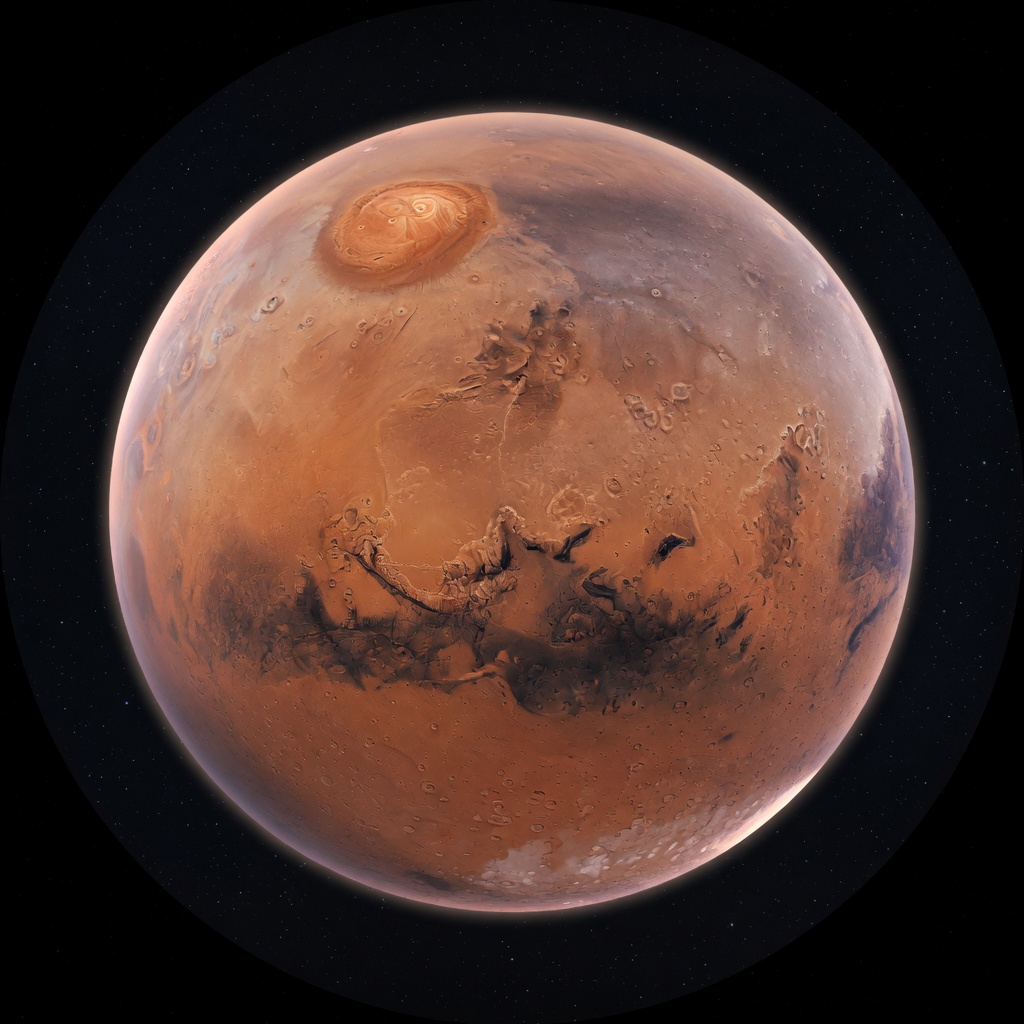
- Not a place you go — no deserts, canals, or cities yet
There are no paintings of Martian landscapes. The “depictions” are gods on vases and coins, cult statues, temple architecture, and words on clay and papyrus that treat a red light as a decision of heaven.
Mesopotamia (c. 3000–500 BCE) — where the nightmare starts
What they dreamed
Mars was not a romantic red planet. It was hostile intelligence in the sky.
- Identified primarily with Nergal: underworld, plague, fever, war, sudden death. Cult: Kutha.
- Also linked to Erra, Ninazu, Nintinugga, Elamite Simut.
- Color and motion mattered more than “surface”: red, irregular, retrograding → false, liar, enemy, strange star.
Manuscripts / tablets
- Enūma Anu Enlil — omen series: Mars positions → war, rebellion, plague, death of kings, crop failure.
- Great Star List — Nergal as false, sinister, hostile, destructive Panther star.
- Astronomical diaries & reports to Neo-Assyrian kings: Mars = foreign enemies, invaders, people from other lands.
Mars is the red star that means someone is about to die, invade, or go mad.
Association of ideas: Nergal as lord of the “dark” region + dark-red color of Mars; red suggesting blood and fire → ill-boding omens with the planet’s appearance and position.
Egypt — Horus the Red
Names & perception
- Early: Horus of the Horizon (one of several planetary Horus forms).
- Later: Horus the Red (Her Deshur / Ḥr Dšr).
- Mars, Jupiter, Saturn as manifestations of Horus; Mars is color-marked.
Material culture
Planetary observations appear more in temple and astronomical texts than in free-standing “Mars sculptures.” Visual codes: falcon and red, folded into kingship cosmology rather than a separate Roman-style war-god temple system for the planet alone.
Dream-shape
Not Nergal’s underworld horror, but royal/solar falcon energy tinted red — still martial (Horus vs. Set), still ominous when it misbehaves.
Hebrew world — Ma’adim
- Name is pure observation: the reddening one.
- Talmudic planetary lists later fix Ma’adim among the classical seven.
- Biblical-era Israel did not build a full Mars cult like Babylon or Rome; the planet sits as color omen and later rabbinic astronomy more than national war god.
Greece — Ares the unloved god / Pyroeis the fire-star
Twin tracks
- Ares the Olympian: bloody, chaotic war (not Athena’s strategic war). Often disliked in literature.
- Planet: star of Ares / Pyroeis (“Fiery”).
Art & objects (god more than planet)
- Vase painting — black- and red-figure: bearded warrior or youthful nude with helmet, spear, shield; sometimes with Aphrodite (eros + violence).
- Coins — relatively scarce vs. Athena; when present (e.g. Lesbos electrum hecte), helmeted war.
- Sculpture — fewer free-standing cult statues than other Olympians; reliefs, gems, coins dominate.
Philosophy / astronomy
Plato-era language already has Areos aster. Greeks inherit and rework Babylonian planetary order; Mars becomes the hot, dry, violent planet of Hellenistic astrology.
Ares = the worst of war. The planet is his eye in the sky — fiery, malevolent when aspected badly, but still a star, not a desert world.
Rome — Mars as founder, not just butcher
Rome is where Mars becomes civilization’s father, not only chaos. (Late Republic through Augustus remains the pre-Christian cult horizon.)
Myth core
- Father of Romulus and Remus (by Rhea Silvia).
- God of war + agriculture (March = campaigns and planting).
- Sacred animals: wolf, woodpecker.
- Month: Martius. Field: Campus Martius.
Temples & sculpture
| Site | Meaning |
|---|---|
| Ara Martis (Campus Martius) | Earliest cult focus; outside sacred city boundary (pomerium) |
| Temple of Mars (Republican) | War aspect; soldiers assemble; cavalry parade origin |
| Temple of Mars Ultor (Forum of Augustus, vowed 42 BCE, dedicated 2 BCE) | “Mars the Avenger” — Augustus avenging Caesar; imperial ideology |
Cult image of Mars Ultor (lost original, known from copies): bearded, Corinthian helmet, cuirass — Capitoline Mars type is the best large-scale reflection.
Coins
- Helmeted head of Mars on early Republican bronze and countless denarii.
- Augustus: reverse with Temple of Mars Ultor.
- Mars standing nude or cuirassed, spear + shield, Victory, standards.
Mars = Rome’s bloodline, virility, victory, and ordered force. Greeks hated Ares; Romans needed Mars.
China — Yinghuo, the confusing fire
Names
- Yinghuo (荧惑) — dim flickering fire + confusion/disorder.
- Later Huoxing 火星 — Fire Star under Five-Phases theory.
- Faxing 罚星 — Punishment Star.
Perception (Sima Qian tradition)
Yinghuo forecasts chaos, rebels, disease, death, hunger, war. Retrograde and lingering in a region = disaster for the state in that direction; seven months’ linger can mean fall of the state.
Material culture
Court astronomy records, not Roman-style temple statues of “Mars.” The visual is the red moving star; the political is the omen report to the emperor.
Mars is Heaven’s red warning light for rebellion and collapse.
India — Mangala / Angāraka / Kuja
- Personified graha of Mars; red/flame-colored.
- Names stress redness and earth-birth (Bhauma, Kuja).
- Iconography: four-armed, red, trident, mace, lotus, spear; ram mount; rules Tuesday.
- Strength, courage, war, aggression, vitality — dangerous when afflicted.
- Not primarily underworld plague like Nergal; more martial energy and heat.
Navagraha temple sculptures fully flower in later centuries, but the deity-planet identity is ancient; puranic birth stories (Shiva’s sweat / earth-Varaha lines) anchor the myth.
What early depictions look like (pre-Jesus media)
| Medium | What survives | What it shows |
|---|---|---|
| Cuneiform tablets | Omens, star lists, diaries | Mars as Nergal / hostile red star |
| Egyptian astronomical texts | Temple inscriptions, star lore | Horus-the-Red |
| Greek vases | Amphorae, kylikes | Ares armed / with Aphrodite |
| Roman coins | Silver/bronze mass production | Helmeted Mars, temples, trophies |
| Roman sculpture | Cult copies, reliefs | Bearded or beardless warrior, cuirass or nude |
| Chinese histories | Official astronomical chapters | Yinghuo omens for the state |
| Indian images & texts | Puranic/jyotisha + temple continuity | Red four-armed Mangala on ram |
Part I summary
Before Jesus, Mars is god + omen + color. The universal key is redness read as blood and fire. Cultures disagree on whether the red power is pure plague (Nergal), chaotic battle (Ares), ordered ancestral force (Roman Mars), heavenly punishment (Yinghuo), or martial graha (Mangala) — but nobody yet dreams of walking on its sand.